

Views: 0 Author: Site Editor Publish Time: 2026-03-10 Origin: Site
Confusion often arises when buyers hear the terms mini excavator and compact excavator used interchangeably. Equipment dealers, rental companies, and contractors sometimes refer to similar machines using different names, which makes it difficult for buyers to determine what size or type of machine actually suits their work. A Mini Excavator is generally associated with extremely compact dimensions and easy transport, while a compact excavator typically represents a slightly larger class with stronger digging performance and lifting capacity. Understanding the real differences between these categories helps contractors match equipment to their jobsites more effectively. When buyers clearly understand how size, reach, mobility, and attachment capability affect performance, they can select machines that improve productivity while avoiding unnecessary cost or oversized equipment.
Many equipment dealers and rental companies use flexible terminology when describing small excavators. A machine weighing two or three tons might be labeled a mini excavator in one catalog but appear under the compact excavator category in another. Because both machines are smaller than full-size excavators, the terminology often overlaps in everyday conversation. This overlap makes it difficult for new buyers to understand whether they are looking at two different machines or simply different descriptions of the same class.
Instead of focusing only on naming conventions, experienced contractors often evaluate equipment by operating weight. Weight influences stability, digging force, reach, and lifting capacity. Smaller machines under two tons are designed for narrow access and light work, while heavier compact machines offer greater power and stability. Understanding these weight categories helps buyers identify the right machine for specific job requirements.
Another reason for confusion is that two machines may both physically fit on a jobsite, yet only one completes the work efficiently. A smaller excavator may enter tight spaces easily, while a slightly larger compact excavator might complete digging tasks faster because of stronger hydraulic output and larger bucket capacity. Buyers must balance accessibility and productivity when selecting the right machine.
Mini excavators are designed primarily for compact work environments. Many models fall into micro and lightweight categories that allow them to pass through narrow gates or operate inside confined residential spaces. Their lighter weight also simplifies transportation. Contractors can often move these machines using smaller trailers or light trucks, reducing logistics complexity between jobsites.
Compact excavators generally occupy the next size category above micro machines. They offer increased reach, deeper digging capability, and greater lifting capacity. This additional performance allows them to handle more demanding tasks such as deeper trenching, heavier material movement, or larger attachments. The trade-off is that compact excavators require slightly more transport planning and operating space.
For many contractors, access conditions determine machine selection. Landscapers working inside residential gardens may need equipment that fits through narrow gates without damaging lawns. Utility contractors working along city streets may require machines small enough to maneuver around traffic and infrastructure. In these situations, machine width and weight become critical considerations.
Performance differences between mini and compact excavators become more noticeable during demanding tasks. Compact machines typically provide greater digging depth and longer reach, which allows operators to complete trenching projects more efficiently. Breakout force also increases with machine size, enabling the bucket to penetrate harder soil or compacted ground.
Lifting capacity depends on both hydraulic strength and machine stability. Compact excavators often support larger buckets and heavier loads because their frames and counterweights are designed to manage greater stress. Mini excavators, while capable of lifting moderate loads, are optimized for lighter operations.
On jobsites involving trenching or foundation preparation, compact excavators frequently deliver faster cycle times. Their stronger hydraulic systems allow operators to move more material in each bucket load. Mini excavators, however, excel in precision work such as landscaping, utility installation, or small renovation projects where maneuverability is essential.
While smaller machines appear convenient, larger compact models sometimes complete tasks faster and more efficiently. If the job requires repeated digging cycles or moving heavy soil, the additional power of a compact excavator can reduce overall project time.
One of the biggest advantages of mini excavators is transport convenience. Their compact dimensions and lower weight allow contractors to move equipment quickly between jobsites. This flexibility is especially valuable for landscaping companies or small contractors who perform multiple jobs each day.
Compact excavators provide more power but require slightly more transport planning. Larger trailers and stronger towing vehicles may be necessary. However, the improved digging capacity and stability often compensate for this additional logistics effort.
Many compact machines feature rubber tracks designed to protect finished surfaces such as pavement or lawns. Expandable undercarriage systems on smaller machines allow operators to narrow the track width when passing through tight spaces and widen it again for stability during operation.
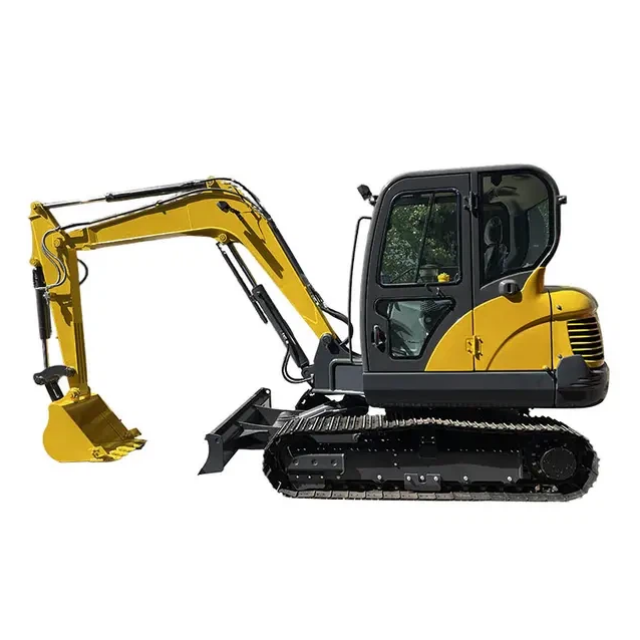
Attachments significantly expand the range of tasks an excavator can perform. Buckets remain the most common attachment for digging and material handling, while hydraulic breakers allow demolition work. Augers help drill holes for fence posts or foundations, and grapples assist in handling logs or debris.
Modern excavators often include auxiliary hydraulic circuits that power specialized attachments. Quick couplers enable operators to switch between tools quickly, improving productivity across different tasks.
The types of attachments planned for use should influence machine selection. A contractor planning to operate heavy hydraulic breakers may require a compact excavator with stronger hydraulic flow, while lighter landscaping attachments work effectively on smaller machines.
Landscaping professionals often prefer mini excavators because they minimize surface damage and maneuver easily around plants, fences, and structures. These machines are ideal for tasks such as digging planting holes, grading soil, or installing irrigation systems.
Utility contractors working with pipelines or cables frequently require deeper digging capability. Compact excavators provide the reach and hydraulic power necessary to create longer trenches efficiently.
Construction teams working on residential foundations or renovation projects benefit from machines that balance compact size with adequate digging performance. Depending on access conditions, either a mini excavator or compact excavator may be suitable.
Municipal maintenance teams often require versatile machines capable of performing a wide range of tasks. Compact excavators provide the flexibility to handle trenching, material handling, and small infrastructure repairs.
Loongsheen offers micro class machines designed specifically for confined work environments. These machines provide excellent maneuverability and minimal ground disturbance, making them ideal for residential landscaping or indoor renovation work.
Machines in the 1.5 to 3.5 ton category represent a balanced solution for many contractors. They provide sufficient digging depth, stable lifting capability, and efficient hydraulic performance while remaining compact enough for urban jobsites.
For contractors requiring greater lifting capacity or stronger attachments, Loongsheen also provides larger compact excavator models. These machines support heavier buckets, breakers, and augers while maintaining maneuverability in limited spaces.
Selecting equipment according to working conditions ensures better return on investment. When machine size matches the demands of the jobsite, operators experience improved efficiency, lower fuel consumption, and fewer operational limitations.
Factor | Mini Excavator | Compact Excavator | Best Fit Scenario |
Operating Weight | Very light machines for narrow access | Slightly heavier machines with stronger performance | Depends on site size |
Transport | Easier transport with light trailers | Requires larger transport equipment | Contractors with multiple jobs |
Digging Power | Suitable for light trenching and landscaping | Greater digging depth and breakout force | Utility and construction tasks |
Attachments | Works well with light attachments | Supports heavier hydraulic tools | Demolition or drilling work |
Stability | Good for compact spaces | More stable during heavy lifting | Larger excavation jobs |
Selecting the right machine requires evaluating access conditions, digging requirements, attachment needs, and transportation logistics. Terminology alone does not determine the best choice. Contractors benefit most when equipment size matches the actual workload and jobsite conditions. A well-matched small excavator allows operators to work efficiently while maintaining flexibility across residential construction, landscaping, and utility projects.
Loongsheen manufactures a wide range of compact construction machines designed for diverse jobsites. Our engineering team develops excavators, loaders, rollers, and other equipment at our production base in Jining, Shandong. If you want more information about available models, configurations, or delivery options, contact our team to discuss the best solution for your project.
The primary difference lies in operating weight and performance. Mini excavators focus on extremely compact dimensions and easy transport, while compact excavators offer greater digging depth, lifting capacity, and hydraulic power.
Mini excavators are ideal for landscaping, residential projects, and tight access jobsites where maneuverability and minimal surface impact are important.
Yes. Compact excavators generally provide stronger hydraulic flow and greater stability, which allows them to operate heavier attachments such as hydraulic breakers or augers.
Both machines can perform similar tasks, but efficiency varies depending on job requirements. Mini excavators excel in confined areas, while compact excavators complete heavier work faster.


