

Views: 0 Author: Site Editor Publish Time: 2026-05-19 Origin: Site
Heavy equipment acquisition involves high capital stakes. You must choose your machinery carefully. Picking between a Mini Excavator and a skid steer fundamentally dictates your workflow. It controls daily labor costs. It also changes your overall project turnaround times. Both machines offer extremely compact footprints. They also provide incredible attachment versatility. However, their core engineering serves completely opposite primary functions. One handles stationary, precise digging tasks. The other excels at mobile material transfer.
This guide relies on real-world operator realities and surface impact data. We avoid complex long-term cost calculations here. Instead, we use clear return-on-investment frameworks to drive your confident purchasing or rental decision. You will learn exactly how structural design affects job site capability. We will cover the best primary applications for each unit. You will discover key evaluation dimensions to simplify your final choice.
Core Function: Mini excavators prioritize stationary, 360-degree precision tasks (trenching, digging); skid steers prioritize mobility and material handling (grading, sweeping, lifting).
Space Constraints: For extreme confined-space access (backyards, indoor demo), a 1-ton mini excavator typically outperforms skid steers due to retractable tracks and zero-tail-swing options.
Terrain Impact: Tracked mini excavators and compact track loaders (CTLs) distribute weight better for muddy conditions, whereas wheeled skid steers are optimal for hardscapes but cause higher ground disturbance.
Investment Reality: Your decision should weigh attachment compatibility, transport weight limits, and primary daily utility over isolated edge-case tasks.
The mechanical architecture of heavy equipment sets strict limits on performance. You cannot force a machine to perform outside its designed geometry efficiently. Understanding these structural differences prevents costly deployment errors.
The Mini Excavator Advantage
The core advantage of Small Crawler Digger Excavators lies in their independent track movement paired with a 360-degree rotating house. Operators sit in a centralized cab. They can spin the entire upper structure continuously. This independent movement means they dig, lift, and dump without constantly repositioning the undercarriage. Furthermore, the boom and stick design proves invaluable. It allows operators to work far below grade. They can easily reach over walls or fences. This saves immense amounts of time on congested sites.
The Skid Steer Loader Advantage
Skid steers utilize a rigid frame. This frame allows for zero-radius turning by operating the left and right wheels independently. They skid across the ground to pivot. Manufacturers design these machines for forward-facing actions. They excel at pushing soil, lifting pallets, and continuous movement across a site. Their center of gravity sits lower for horizontal travel. This makes them highly efficient loaders. They act as rapid transit vehicles for heavy materials.
Operator Visibility & Safety
Visibility directly impacts job site safety. Experienced operators know this well. Excavators offer unobstructed views of the trench. Operators look directly down at their work area. They see exact bucket placement clearly. Conversely, skid steers inherently suffer from blind spots. The loader arms sit on either side of the cab. A raised bucket can easily obscure forward vision. You must implement strict spotter protocols when operating skid steers in busy areas.
Best Practice: Always maintain a 10-foot safety perimeter around rotating excavators.
Common Mistake: Driving a skid steer blindly forward with a fully loaded, raised bucket.
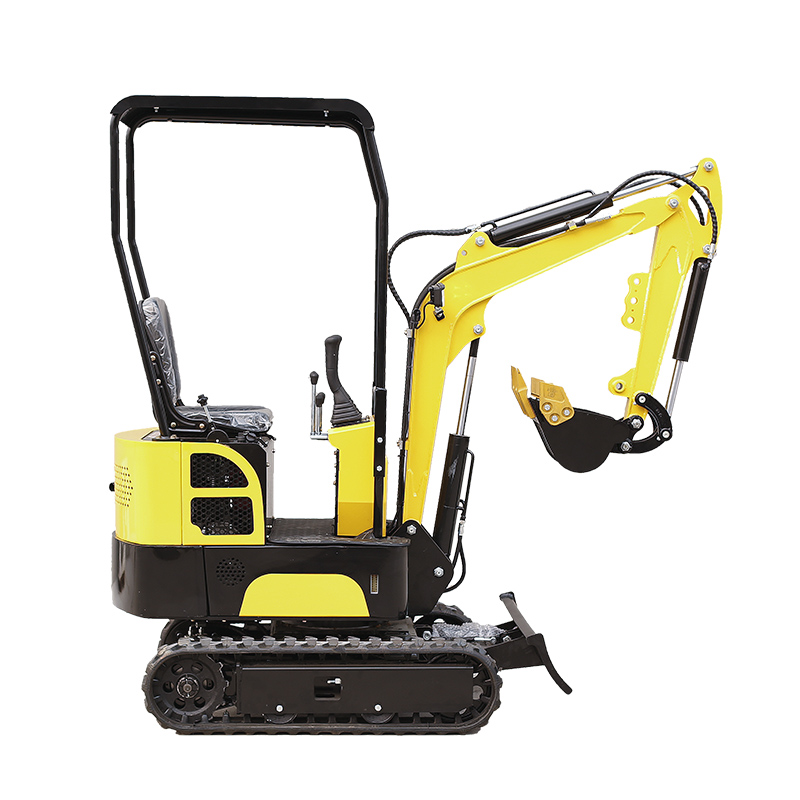
Excavators dominate when tasks require focused, stationary power. Utility trenching stands out as their primary application. Plumbers and electricians rely on them to carve precise lines into the earth. Foundation digging also requires the deep reach they provide. They remove soil cleanly without disturbing surrounding structures.
Selective demolition serves as another highly successful application. You can equip the machine with a hydraulic breaker. Operators can smash concrete slabs systematically. Grapple attachments allow them to sort debris effortlessly. Working on uneven terrain or steep inclines also demands this machinery. A stationary footprint is absolutely mandatory for safety on slopes. Operators level the blade to anchor the unit. They then dig safely from a secure position.
Modern job sites often feature severe space constraints. Tight residential lots limit heavy equipment access. Indoor commercial renovations pose similar barriers. Here, ultra-compact machinery shines brightly. Contractors frequently struggle to pass equipment through standard property lines.
Consider specific residential use cases. A standard 1-ton mini excavator often features retractable tracks. Operators shrink the undercarriage width temporarily. The machine then easily fits through standard 36-inch garden gates. Once inside the backyard, they expand the tracks for stability. This simple mechanism eliminates days of grueling manual labor. Landscapers no longer need shovels and wheelbarrows for deep planting or terracing. The micro-machine delivers commercial hydraulic power into isolated domestic spaces.
Skid steers rule the horizontal plane. They dominate site grading and leveling operations. Operators use the front bucket to shave high spots. They drag the bucket backward to backfill large areas smoothly. When you need to load dump trucks rapidly, skid steers perform exceptionally well. They scoop bulk material, pivot, and dump in seconds.
They also serve as logistical workhorses. You can attach pallet forks to move heavy hardscape materials. They transport brick, sod, and lumber across massive distances quickly. During the off-season, they remain highly profitable. Snow removal and street sweeping represent highly common return-on-investment generators for contractors in colder climates.
Industry professionals view the skid steer as a universal attachment carrier. Most units feature a standard quick-attach plate ecosystem. Operators swap tools in mere minutes. You can mount hydraulic augers for fence posts. You can attach heavy-duty trenchers or forestry mulchers. This versatility makes them incredibly attractive for mixed-service contractors.
However, you must understand the implementation risks. A major misconception exists regarding backhoe attachments. Many buyers assume a skid steer equipped with a backhoe replaces a dedicated excavator. It does not. The attachment suffers from a severely limited swing radius. It also generates significantly lower breakout force. You must reposition the entire skid steer constantly to dig a simple trench. This drains fuel and ruins operator efficiency.
Choosing between these two machines requires a structured evaluation. You must weigh environmental constraints against logistical realities. We break down the core dimensions below.
Site Damage and Ground Pressure
Wheeled skid steers inherently cause severe turf disruption. Their skidding action literally tears grass from the roots. They leave deep ruts in soft soil. You will spend extra money repairing landscapes if you use them carelessly. Rubber-tracked excavators solve this problem. They offer incredibly low ground-bearing pressure. They distribute weight evenly across a large surface area. Operators can track across established lawns with minimal damage.
Logistics and Transportability
Transporting machinery poses hidden challenges. Towing limits dictate your daily logistics. Many modern skid steers weigh significantly more than they appear. Hauling them often requires a commercial driver's license (CDL) setup. It depends heavily on local trailer weight laws. Conversely, a 1-to-3-ton excavator remains highly portable. You can often tow it safely using a standard 3/4-ton pickup truck. This lowers barrier-to-entry for smaller contracting businesses.
Operator Learning Curve
Machine controls vary drastically. Excavators utilize standard dual joystick controls. Operators must learn ISO or SAE control patterns. The learning curve focuses on spatial awareness and simultaneous multi-axis movements. Skid steer mechanics feel quite different. Drive mechanics involve pushing steering levers forward or backward. Modern units offer selectable joystick controls. However, the bouncy ride and fast travel speeds require faster operator reflexes.
Evaluation Dimension | Mini Excavator | Skid Steer |
|---|---|---|
Ground Disturbance | Very Low (Tracked) | High (Wheeled skidding) |
Primary Movement | Stationary 360-degree rotation | Constant horizontal travel |
Transport Ease | High (Lighter overall weight) | Moderate (Heavier, may need CDL) |
Visibility | Excellent downward view | Poor forward view when lifted |
Financial prudence determines business survival. You must evaluate machinery through strict budgetary lenses. Equipment purchases tie up significant capital. Understanding maintenance life cycles prevents unexpected cash flow shortages.
Upfront Costs vs. Maintenance Life Cycle
Baseline purchase prices fluctuate based on tonnage and brand. However, maintenance realities diverge sharply between categories. Skid steers historically incur much higher undercarriage wear costs. Compact track loaders (CTLs) face especially brutal wear rates. They constantly travel across abrasive surfaces. Sand and gravel grind down track sprockets rapidly. Conversely, excavators sit stationary while digging. Their tracks only move during repositioning. This drastically extends the lifespan of their undercarriage components. You will spend less on replacement tracks over a five-year period.
Evaluating the Market for Your Next Step
Assessing used equipment requires technical diligence. You must verify actual machine hours. You should test hydraulic pump health thoroughly. Weak hydraulics indicate an impending, expensive failure. Listen for whining noises during operation. Check all cylinder seals for oil leaks.
Inspect the slew ring bearing for excessive play.
Test hydraulic response times under load.
Examine the undercarriage for irregular sprocket wear.
Verify the health of quick-attach coupler pins.
Establish clear commercial contexts before buying. If you are looking for a 1 ton mini excavator for sale, you must outline exact ROI thresholds. Do not buy machinery based on emotion. Calculate the manual labor costs you currently pay. For example, replacing two to three manual laborers over a six-month project timeline easily justifies the baseline equipment cost. The machine never takes a break. It pays for itself through raw productivity gains.
Choosing the right machine shapes your operational success. Reviewing primary task requirements keeps your purchase focused. Use the guidelines below to finalize your decision confidently.
Summary Matrix: Choose the mini excavator for vertical work. It dominates digging, trenching, and lifting below grade. Choose the skid steer for horizontal work. It excels at pushing, grading, and carrying materials across grade.
Next-Step Actions: Audit your primary tasks for the next 12 months. Buy the machine that handles 80% of your daily workload. Rent the secondary machine for isolated edge cases. Never compromise your primary equipment purchase for a rare task.
Safety First: Commit to proper operator training regardless of your choice. Familiarize your crew with specific machine controls before deployment.
A: Only superficially via attachments. You can add a backhoe arm, but it lacks true reach. It cannot match below-grade depth. It also misses the crucial 360-degree flexibility of a dedicated excavator. You will waste fuel constantly repositioning the loader.
A: Mini excavators minimize turf damage drastically. They access tight backyards easily through narrow gates. However, skid steers are required for moving bulk mulch, soil, or hardscape pallets across wide spaces. Choose based on your primary daily task.
A: Yes, for small to medium root balls. You achieve this through precise root cutting rather than brute-force pulling. Operators sever surrounding roots systematically. Larger commercial land clearing, however, absolutely requires heavier tonnage machinery.


