

Views: 0 Author: Site Editor Publish Time: 2026-10-08 Origin: Site
Municipal contractors, utility workers, and civil engineers face tough choices when evaluating mid-sized earthmoving equipment. Spec sheets often highlight maximum capabilities. However, your operational profitability relies on sustained daily output. Buyers must understand how mobility and hydraulic reach translate into actual cycle times. A 9 ton wheeled excavator is a highly specialized investment for modern fleets. Earning a positive return requires careful evaluation. You need to align specific digging depth and travel speed capabilities with your exact job site logistics. Do not simply buy the machine boasting the highest paper specifications. In this guide, you will learn how to evaluate true breakout force and calculate real transit time savings. We will explore how these mobile machines bridge the gap between compact track loaders and heavy-duty diggers. You will discover actionable strategies to optimize your next procurement decision and boost daily trenching productivity.
Optimal vs. Maximum Depth: Maximum digging depth is a marketing metric; productivity is dictated by the optimal flat-bottom trenching depth, which is typically 60-70% of the maximum specification.
Mobility as a Cost-Saver: A wheeled chassis capable of 20–30 km/h eliminates the need for lowboy transport between adjacent urban job sites, drastically reducing non-billable transit time.
The Stability Trade-off: Wheeled excavators require strict deployment of outriggers or dozer blades for deep digging, which adds seconds to every repositioning cycle.
You need the right machine for complex urban environments. We position the 9T Wheel Excavator as the perfect operational bridge. It sits directly between compact tracked minis and large 14-ton wheeled machines. Compact minis offer excellent stability but severely lack mobility. Large excavators provide high lifting capacity but restrict urban access. You gain the best of both worlds by targeting the 9-ton category.
Operators must define primary business goals for this specific weight class. You should aim for rapid equipment deployment. You must also prioritize minimal surface disruption on finished asphalt. Sufficient hydraulic flow for utility trenching remains a critical success factor. Municipalities demand strict compliance from contractors performing street repairs. A massive crawler machine destroys pavement quickly. Rubber tires protect the existing infrastructure perfectly.
Urban load restrictions complicate equipment logistics daily. Heavy flatbed trucks often require multi-lane closures. City engineers frequently reject these disruptive traffic plans. A 9-ton machine complies easily given its compact footprint. Its operating weight allows single-lane closure requirements. You simply drive it into the designated work zone. It performs the necessary excavation safely alongside active traffic.
Machine Category | Site Mobility | Urban Access | Base Stability | Primary Application |
|---|---|---|---|---|
Compact Tracked Mini (3-5T) | Low | High | Very High | Backyard landscaping |
9-Ton Wheeled Unit | Very High | High | Moderate | Urban utility trenching |
Large Wheeled (14T+) | High | Low | High | Major highway projects |
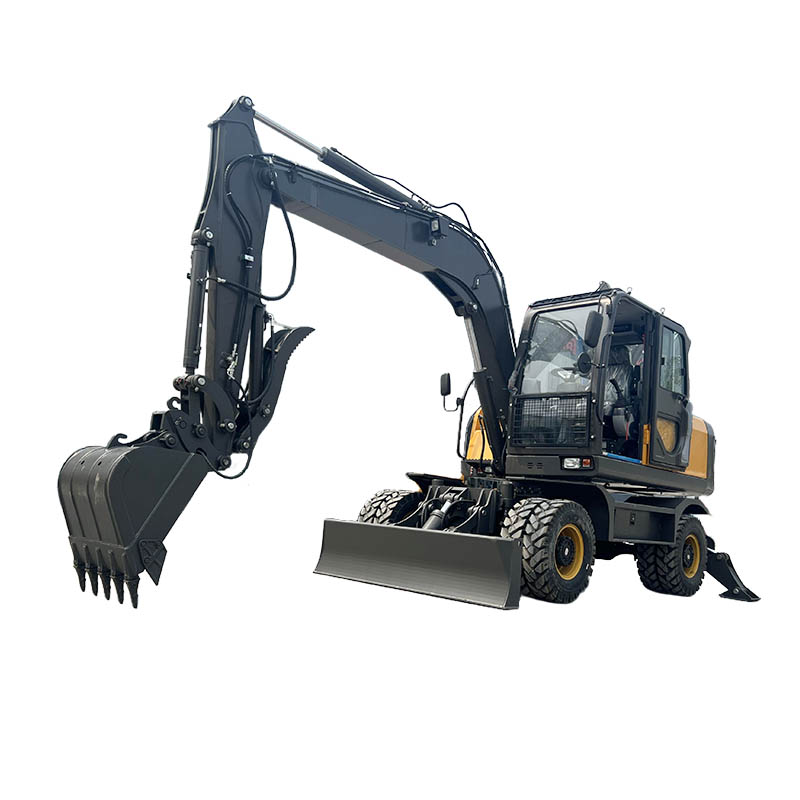
Manufacturers aggressively market maximum digging depth specifications. You must deconstruct this feature-to-outcome relationship carefully. Operating any excavator at its maximum reach reduces your bucket fill factors. The hydraulic cylinders lose vital mechanical leverage. Boom arms strain unnecessarily under extreme geometric extension. You waste fuel and time chasing these marketing metrics.
We rely on the optimal flat-bottom trenching depth instead. Introduce the concept of the 8-foot utility trench into your planning. A 9-ton unit excels perfectly at this specific depth. The machine maintains maximum hydraulic breakout force easily here. Operators achieve 100% bucket fill rates consistently. They do not fight against compromised cylinder angles. The equipment performs smoothly throughout the entire curl cycle.
Kinematics play a massive role in urban excavation scenarios. Many 9-ton models feature an articulated two-piece boom. This specialized design allows digging vertically close to the machine. Standard mono-booms require a long forward reach. An articulated boom folds tightly against the cab. You can trench directly adjacent to your front tires. This capability proves crucial for cramped urban environments.
Operators frequently praise this articulated flexibility. They avoid repositioning the chassis just to finish a trench end. The two-piece boom also improves load-over height significantly. You can dump spoil into tall municipal dump trucks effortlessly. True breakout force remains strong across a wider range of motion. You secure better productivity by understanding these functional kinematics.
Mobility directly impacts your daily operational profitability. We recommend building a strict mobility return-on-investment framework. Consider the logistical burden of a traditional tracked machine. You must summon a heavy truck and trailer. Operators spend time loading and chaining the equipment down. Unloading at the next site repeats this tedious process. This entire sequence easily consumes one hour of labor.
Conversely, a modern 9 ton wheeled excavator changes the math completely. You simply shift the transmission into travel mode. The operator drives 5 kilometers down the road comfortably. The entire trip takes approximately 15 minutes. You eliminate 45 minutes of non-billable transit time instantly. You also remove the secondary transport truck from your fleet expenses.
In-site repositioning speed also transforms repetitive linear tasks. Pipe laying and ditch cleaning require constant forward movement. Tracked machines crawl slowly between digging points. They also cause severe asphalt scarring during sharp turns. Wheeled units roll forward smoothly in seconds. They preserve the finished pavement completely. Faster repositioning compounds into massive time savings daily.
Compliance and safety remain critical during road transit. You must check local road homologation rules carefully. Examine the steering types offered by the manufacturer. Two-wheel steer works well for basic roading. Four-wheel and crab steer allow moving sideways away from curbs. Ensure your unit features active ride control systems. These hydraulic accumulators prevent material spillage during high-speed transit.
You should measure output using a standardized mathematical approach. Equipment managers rely on a simple but effective output formula. You multiply bucket capacity by the fill factor. Then, you multiply that result by your total cycles per hour. Finally, you must subtract all setup and repositioning time. This final variable often dictates your true daily productivity.
The outrigger variable introduces a unique challenge for wheeled machines. These units require engaging stability aids for deep digging. You must deploy rear outriggers or lower the front dozer blade. This mechanical setup time must factor into your cycle calculations. Lifting and lowering stabilizers adds seconds to every single move. You must account for this reality when planning linear trenches.
We observe a common operational reality on fast-paced sites. Operators often underutilize the machine's actual digging capacity. They feel too rushed to set outriggers properly for shallow work. They attempt to dig while resting solely on the tires. This risks dangerous tipping and reduces available breakout force. You need equipment featuring fast-acting hydraulic stabilization controls to prevent this.
Quick deployment encourages operators to use stabilizers consistently. They press a button and secure the machine instantly. Proper stabilization restores full hydraulic power to the digging arm. It keeps your operators safe and highly productive. Train your crews to execute this setup routine flawlessly. Efficient stabilization routines minimize the negative impact on your hourly cycle times.
We must acknowledge the physical limitations of wheeled machines transparently. Balanced evaluations build trust and guide better fleet decisions. Wheeled excavators cannot handle every single environment effectively. They represent specialized tools for specific ground conditions. Pushing them beyond their designed environments severely limits their productivity.
Surface conditions often handicap wheeled excavators significantly. Deep mud stops them entirely. Uneven virgin terrain causes dangerous instability during travel. Steep gradients challenge their braking and climbing capabilities. Tracked counterparts perform much better across these harsh conditions. Wide steel tracks distribute weight beautifully over soft ground. Rubber tires sink quickly under the same machine weight.
Maintenance realities introduce another layer of operational risk. Wheels face severe vulnerabilities in demolition or sharp-rock environments. A single tire puncture paralyzes the machine immediately. Rough terrain also causes heavy axle stress during transit. You must budget for these specific environmental hazards. Evaluate your job sites carefully before deploying rubber-tired units.
Multi-surface tires represent a significant ongoing expense. Standard dual tires trap rocks between the rims. These trapped rocks destroy the sidewalls over time. Single wide tires prevent this but cost more upfront. You must manage tire pressure meticulously to ensure safety. Ignore these maintenance realities, and your productivity will plummet rapidly.
Buyers demand specific features when comparing complex equipment quotes. You need a strict shortlisting logic to evaluate different brands. Do not rely solely on basic horsepower numbers. Focus on the components driving real daily productivity. Use this strategic checklist when reviewing your next equipment purchase:
Hydraulic Flow Capacity: Verify the auxiliary flow rates carefully. Ensure they provide sufficient power for high-demand attachments. Tiltrotators, flail mowers, and hydraulic hammers require steady, robust pressure.
Drivetrain Quality: Scrutinize the axle load ratings heavily. Verify the transmission reliability for frequent high-speed road travel. Hydrostatic drives offer superior control during tight maneuvers.
Cab Ergonomics: Assess visibility from the operator seat. Operators need completely clear sightlines for roading safely. They also need excellent downward visibility for precise trench-viewing.
Stabilization Speed: Test the outrigger and dozer blade controls. They must deploy quickly and lift smoothly. Slow hydraulics here will ruin your cycle times permanently.
Take decisive action after shortlisting your top candidates. Guide your procurement team to request an active field demonstration. You must test the machine on your specific terrain. Do not accept a simple drive around a dealer's flat gravel lot. Dig a real trench. Drive it down a real city street. If you need expert fleet guidance, contact our engineering team about your next 9T Wheel Excavator today.
The 9-ton wheeled excavator stands as a high-yield asset for modern contractors. It perfectly serves operations losing profit margins to logistics and transport times. Digging depth provides the necessary capability to handle municipal utility work. However, high-speed travel provides your true operational profitability. You eliminate transport bottlenecks and complete more jobs daily. We strongly advise evaluating your typical route distances and average trenching depths. Align your next purchase with these exact logistical realities. Contact our sales and engineering team today. We can run a fleet-specific efficiency analysis for your business. You can also schedule a comprehensive site assessment to guarantee the perfect equipment match.
A: They offer similar maximum digging depths. However, tracked machines offer faster repositioning while digging. They possess inherent base stability without relying on outriggers. Wheeled machines require deploying stabilizers for deep trenches, which slightly increases cycle times during frequent linear moves.
A: This depends heavily on local road laws. You must also check specific manufacturer hitch ratings. Many modern wheeled units efficiently tow small trailers. This allows you to transport extra buckets and hydraulic breakers easily between local job sites.
A: Road travel at high RPMs consumes more fuel than steady-state trenching. Driving between sites requires continuous drivetrain power. Modern units feature eco-modes and advanced hydrostatic transmissions. These technologies significantly optimize fuel efficiency during both transit and heavy excavation phases.


