

Views: 0 Author: Site Editor Publish Time: 2026-05-07 Origin: Site
Evaluating equipment for material handling, pipe laying, or hardscaping requires precise capacity data. You cannot rely on generic marketing claims. Overestimating lift capacity easily leads to dangerous tipping hazards on your jobsite. Underestimating capacity leads to bloated equipment costs and poor efficiency.
Our goal is to demystify how manufacturers calculate these critical lift limits. We will explain the common variables degrading real-world lifting power. Finally, we provide a structured decision framework for sizing the perfect Mini Excavator for your daily operations. You will learn how to read load charts, account for attachment weight, and ensure safe hoisting.
Lift capacity is not a static number—it fluctuates drastically based on boom extension, lift height, and machine orientation.
A standard 2.5Ton mini excavator typically lifts between 600kg to 1000kg close to the machine, but capacity drops by up to 50% at full reach.
True lifting capability (Net Lift) requires subtracting the weight of your attachments (buckets, thumbs, couplers) from the machine's Gross Lift rating.
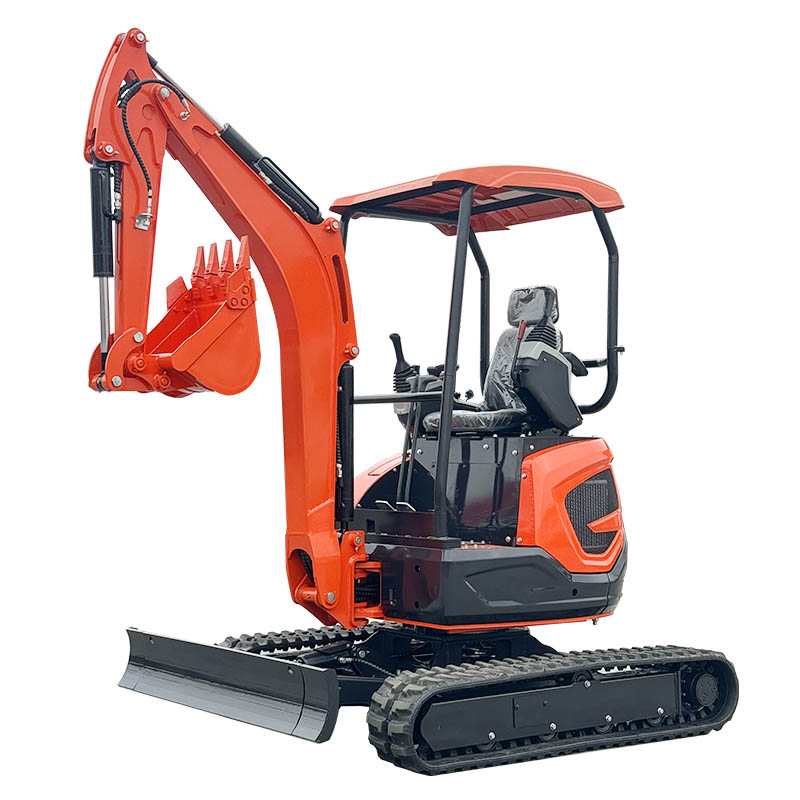
Over-front lifting (supported by the blade) is significantly stronger and more stable than over-side lifting.
Mapping operating weight to baseline lifting capabilities helps buyers shortlist the correct tonnage class. A machine's physical weight acts as its anchor against gravity. Heavier machines provide better leverage against heavy loads. We categorize lifting power by reach. Short reach means keeping the load close to the undercarriage. Full extension means stretching the boom straight out horizontally. Leverage changes dramatically across this distance.
To simplify your initial equipment evaluation, we compiled a comparison chart. This table highlights how lifting capacity scales across different machine sizes.
Weight Class | Common Application | Short Reach Capacity (Close to Undercarriage) | Full Extension Capacity (Max Reach) |
|---|---|---|---|
1 to 1.5-Ton Class | Tight access landscaping, indoor demolition | ~300kg – 500kg (660 – 1,100 lbs) | ~150kg – 300kg (330 – 660 lbs) |
2 to 3-Ton Class | General utility, residential plumbing, fencing | ~600kg – 1000kg (1,320 – 2,200 lbs) | ~300kg – 600kg (660 – 1,320 lbs) |
4 to 5-Ton Class | Foundation digging, heavy material handling | ~1200kg – 1800kg (2,640 – 3,960 lbs) | ~600kg – 900kg (1,320 – 1,980 lbs) |
6 to 8-Ton Class | Commercial site prep, trench boxes | ~2000kg – 3000kg (4,400 – 6,600 lbs) | ~1000kg – 1500kg (2,200 – 3,300 lbs) |
These ultra-compact machines excel in tight alleyways and backyard access. However, their light footprint severely limits hoisting ability. At a short reach, they comfortably manage 300kg to 500kg. Once you extend the boom fully, expect this number to drop sharply to 150kg to 300kg. You should restrict these models to moving small landscaping boulders or minor debris.
This class represents the industry standard for independent contractors. The highly popular 2.5Ton mini excavator falls directly into this category. It balances transportability against genuine muscular power. At a short reach, you can hoist 600kg to 1000kg. This proves ideal for placing concrete septic tanks or heavy drainage pipes. At full extension, the capability settles between 300kg and 600kg.
Machines in this bracket cross over into serious commercial capability. You can expect short reach lifts between 1200kg and 1800kg. When fully extended, they still offer a respectable 600kg to 900kg of capacity. These excavators handle wet root balls, large retaining wall blocks, and trench boxes effortlessly.
Often called midi excavators, these units bridge the gap to full-sized equipment. They boast massive short reach capacities of 2000kg to 3000kg. At full extension, they hoist 1000kg to 1500kg. You need dedicated heavy-duty transport trailers for these machines.
Educating yourself on OEM spec sheets prevents under-sizing your purchase. You cannot guess safe load limits based on machine size alone. The factory load chart serves as your ultimate source of truth. Understanding this document ensures operational safety and maximum efficiency.
Lift Point Height & Lift Radius: Load charts use a grid system. The vertical axis represents lift point height. The horizontal axis represents lift radius (distance from the machine's center). As the radius increases, your leverage shifts. Your lifting capacity drops exponentially the further away you reach.
Over-Front vs. Over-Side Ratings: Equipment stability depends heavily on track orientation. Lifting over the front provides maximum stability. Engaging the dozer blade firmly with the ground creates a strong mechanical anchor. Conversely, lifting over the side exposes the machine's weakest orientation. Tracks provide a narrower lateral footprint, making side tipping your primary operational limitation.
Gross Capacity vs. Net Capacity: Load charts strictly indicate Gross capacity. This number reflects the bare machine linkage without tools attached. You must calculate your actual payload. The golden rule is simple: Net Capacity equals the Chart Rating minus your Attachment Weight. You must deduct the weight of the bucket, quick coupler, and hydraulic thumb.
Factory load charts assume perfect, flat concrete testing environments. You rarely experience perfect conditions on active jobsites. Real-world variables aggressively degrade your theoretical lifting power. Overlooking these factors leads to tipping accidents and damaged hydraulics.
Ground Conditions & Subbase: Soft soil, deep mud, or uneven gradients compromise your machine's center of gravity. Sloped terrain invalidates factory load charts entirely. If your tracks sink unevenly into wet ground during a lift, your tipping axis changes instantly. Always secure a flat, compacted operating pad before hoisting heavy materials.
Hydraulic System Health: The boom relies entirely on internal fluid pressure to elevate loads. Worn seals or degraded fluid destroy maximum lifting force. Routine mini excavator maintenance remains mandatory to maintain factory lift ratings. Checking hydraulic fluid levels and inspecting cylinders for internal bypass will prevent sudden load drops.
Attachment Weights: Heavy tools eat directly into your payload budget. A 400 lb hydraulic breaker or a 300 lb auger drive subtracts massive capacity. Operators often forget to deduct heavy quick-attach couplers from their calculations. Always weigh your primary attachments accurately.
Counterweight Limitations: Compact machines frequently feature zero-tailswing (ZTS) designs. ZTS allows the upper house to rotate entirely within the track width. While fantastic for tight urban spaces, this design sacrifices rear mass. The reduced rear counterweight lowers overall lifting capability compared to conventional tailswing models of the exact same size.
Buyers need a clear procurement framework when actively comparing a mini excavator for sale. Relying purely on engine horsepower or digging depth ignores critical material handling needs. Use this four-step decision matrix to size your equipment accurately.
Calculate the weight of the densest material you handle regularly. Do not use average weights. Focus entirely on your heaviest daily tasks. Common heavy items include concrete highway barriers, wet soil blocks, cast iron pipes, or steel trench boxes. Determine this exact weight before opening any equipment brochure.
Lifting massive weight close to the tracks is easy. Placing that weight far away is difficult. How far away from the undercarriage does the material need to go? You might need to lift a sewer pipe over an existing chain-link fence. You might need to reach across a wide trench wall. Measure your maximum required radius. Match this radius against the OEM over-side load chart.
You must balance the need for immense lifting power against practical site access. Massive machines lift massive weights, but they cannot fit through standard residential gate widths. Evaluate narrow alleyways, doorway widths, and the towing limits of your existing transport trucks. A massive machine becomes useless if you cannot legally tow it to the jobsite.
Never buy a machine perfectly matched to your current maximum load. Always factor in a 20% capacity buffer. Maxing out the machine's hydraulic relief valves on a daily basis accelerates component wear. A healthy capacity buffer prevents excessive strain, extending equipment lifespan significantly. It also allows your business to accept slightly larger jobs in the future.
Hoisting heavy materials introduces severe site risks. Gravity does not forgive mathematical errors. Operator intuition is never a valid substitute for physical load charts. You must prioritize safety protocols and compliance standards during every lifting operation.
Occupational Safety and Health Administration (OSHA) guidelines mandate strict adherence to manufacturer specifications. Equipment operators must rely entirely on OEM load charts rather than guesswork. You must keep a legible copy of the load chart inside the operator cab at all times. Failing to follow these charts exposes your business to massive liability during an accident.
Modern equipment increasingly incorporates advanced safety technology. Load moment indicators (LMIs) and overload warning alarms prevent dangerous lifts automatically. These electronic systems monitor boom angle, hydraulic pressure, and track orientation. If the operator attempts an unsafe lift, the system triggers audible alarms or physically locks out the lifting circuit. Investing in these features protects your crew and your capital equipment.
Proper rigging separates professionals from amateurs. You must explain the importance of using certified lift eyes to your crew. Many modern buckets feature integrated, rated lifting eyes welded directly into the linkage. Never wrap lifting chains loosely around bucket teeth. Chains easily slip off teeth during movement, causing catastrophic load drops. Always use appropriately rated shackles and synthetic slings.
Load charts measure static, smooth lifts. Real jobsites involve dynamic forces. Jerky, sudden boom movements multiply the physical force exerted on the machine. Swinging heavy loads rapidly across the tracks induces violent lateral momentum. This dynamic force easily flips a machine, even if the static load weight falls well within the chart limits. Operators must perform smooth, deliberate movements when acting as a crane.
Mini excavators serve as highly capable material handlers on modern jobsites. However, their true lifting capacity remains a highly dynamic calculation based on physics, reach, and attachment weight. You cannot evaluate a machine based on broad tonnage claims alone. Every inch of boom extension and every pound of attachment weight changes your safe working limit.
Before making a capital investment, document your heaviest common load. Measure your maximum required placement reach. Match these two numbers against the manufacturer's over-side load chart. Always remember to subtract your bucket and thumb weight. We highly recommend consulting with an equipment dealer to review exact spec sheets. Taking these steps ensures you buy enough power to work safely without wasting money on oversized machinery.
A: Yes. The physical weight of the thumb attachment (often 100-250 lbs) must be subtracted from the machine's total lifting capacity. You must account for this weight to calculate your true net payload accurately.
A: The length of the undercarriage footprint is longer than its width, providing better leverage against tipping. Engaging the dozer blade further anchors the machine directly to the ground, creating a highly stable lifting platform.
A: Because ZTS models have less overhanging counterweight at the rear to offset loads in the front, they generally have a slightly lower lifting capacity compared to conventional-tail machines of the exact same operating weight.


