

Views: 0 Author: Site Editor Publish Time: 2026-05-05 Origin: Site
Operating heavy machinery carries inherent, high-stakes risks on any modern job site. According to Bureau of Labor Statistics data, dump truck operations were linked to 536 fatalities and over 7,000 severe injuries between 2015 and 2020. These staggering numbers highlight a persistent industry challenge. Safety is not just about regulatory compliance. It serves as a critical operational metric for any profitable business. Preventable accidents like dangerous tip-overs or blind-spot collisions lead to severe liability. They trigger skyrocketing insurance premiums and cause project-halting downtime. These disruptions destroy project timelines and risk human lives. In this comprehensive guide, you will learn how to evaluate and implement rigid safety frameworks. We will explore pre-trip inspection routines and site navigation rules in detail. You will also discover how choosing appropriately sized equipment separates high-performing contractors from high-risk liabilities.
Pre-Trip Vigilance Prevents Failure: Uneven tire pressure and neglected hydraulic inspections are leading causes of load-shift tip-overs.
Site Geometry Dictates Action: Unloading must occur on compacted, level ground; even marginal gradients compromise a raised center of gravity.
Strict OSHA Compliance is Non-Negotiable: Mandatory use of physical bed supports and maintaining a 10-foot clearance from power lines are minimum baseline requirements.
Equipment Right-Sizing Reduces Risk: For confined spaces or soft terrain, procuring a specialized mini dumper truck mitigates the fatal risks associated with oversized heavy equipment.
Standard heavy-duty commercial vehicles introduce massive blind spots. They possess exceptionally high centers of gravity. They also present serious crushing hazards across active construction sites. Let us frame this operational problem clearly. When safety protocols fail, companies face immediate OSHA fines. Workers' compensation claims pile up rapidly. Daily operations grind to a halt. Managing a standard Dumper Truck demands precise handling. Fleet managers must understand specific risk vectors to protect their workforce.
Analyzing core failure modes helps us prevent workplace disasters. These large machines fail in highly predictable ways. We can categorize these operational failures into three primary hazard types:
Tip-Overs: These incidents happen frequently during the lift phase. Sticky loads containing frozen dirt or wet clay refuse to slide out evenly. The material clings to the upper section of the raised bed. This imbalance shifts the vehicle's center of gravity backward and sideways, causing a violent rollover.
Electrocution: Operators often lose spatial awareness while watching their rearview mirrors. The raised metal bed contacts overhead electrical lines. This creates a deadly circuit running directly through the vehicle chassis.
Crushing and Run-Overs: Construction sites frequently lack proper traffic control. Massive blind spots hide ground workers. Back-over incidents occur rapidly when spotters are absent or poorly trained.
Industry data reveals crucial insights regarding machine stability. Safety experts emphasize a critical fact. Exactly 25% of all tip-overs stem from a dangerous mismatch. Operators misjudge vehicle speed, load distribution, and underlying site conditions. Managing these three variables prevents catastrophic machinery failure.
A driver’s daily pre-operation inspection serves a vital purpose. It acts as the first line of defense against mechanical failure and legal liability. Skipping these morning checks invites disaster. Site managers must enforce rigid inspection habits before any engine turns over.
To establish baseline safety, operators must follow a strict evaluation routine. You can implement the following required checklist to protect your crew:
Tire Pressure and Axle Alignment: Asymmetrical tire pressure breaks the balance of a raised bed. If the right-side tires lack adequate pressure, the entire truck leans right during a heavy lift. Ensure the tractor and trailer align perfectly straight before dumping. An angled cab easily leads to a dangerous jack-knife scenario.
Hydraulic and Mechanical Supports: Inspect all lift cylinders for fluid leaks daily. Fleet managers must reiterate OSHA standard 1926.601(b)(6). Mechanics and operators must never work under a raised bed without physical, rigid support blocks. You cannot rely purely on hydraulic pressure to suspend thousands of pounds of steel.
Bed Liners Condition: Evaluate the internal surface of the bed liners. These liners ensure wet or freezing materials discharge smoothly. A damaged liner causes material to stick. This uneven discharge throws the entire truck off balance during peak elevation.
Operator Protection Rules: Mandate the strict "three points of contact" rule. Drivers must use two hands and one foot, or two feet and one hand, when entering or exiting the cab. Slip-and-fall injuries account for massive lost-time claims. Furthermore, mandate high-visibility personal protective equipment at all times.
You reduce mechanical unpredictability by adhering strictly to this pre-trip routine. Daily vigilance stops major equipment failures before they breach the construction zone.
Evaluating site readiness remains a non-negotiable step for safe discharge. You must assess the ground conditions rigorously before raising any load. Even minor slopes on uncompacted soil cause catastrophic rollovers. Heavy equipment alters the terrain simply by driving over it.
Enforcing strict execution rules separates safe job sites from hazardous ones. Managers must mandate these operational guidelines for all active zones:
Level Ground Only: Operators must dump materials strictly on firmly compacted soil or crushed gravel. Avoid soft surfaces entirely. A heavy load shift during the lift phase pushes immense pressure downward. Soft mud will collapse under one side of the rear axle, sinking the vehicle and triggering a rollover.
Overhead Hazards: Strictly enforce a minimum 10-foot clearance rule from all overhead electrical lines. Operators must survey the sky above the dump zone before touching the hydraulic controls. Spotters must verify this clearance visually from a safe distance.
Mandatory Communication: Require a dedicated spotter equipped with two-way radios. Tight maneuvers demand an external perspective. The operator cannot see directly behind the tailgate. Hand signals work, but dedicated radio channels eliminate fatal miscommunications.
Emergency Protocol Execution: If a rollover begins, the operator must remain inside the cab. They must keep their seatbelt firmly fastened and brace for impact. Do not attempt to jump out. The machine will crush an escaping driver. However, escaping an electrocution hazard requires a different approach. If the truck catches fire from a power line, the operator must execute a two-foot parallel jump. They must land with both feet together and shuffle away. This prevents deadly step voltage from traveling up one leg and down the other.
Job site geometry constantly changes as earth moves. Operators must treat every dump cycle as a brand-new environmental calculation.
Many severe accidents occur due to poor equipment scaling. Contractors often force standard commercial dump trucks into spaces they never belonged. Pushing massive vehicles onto highly unstable terrain drastically increases tip-over probabilities.
We must evaluate procurement logic carefully. If your operational terrain involves confined residential sites, you face unique risks. Interior demolition projects and muddy ground also demand specialized tools. Down-sizing your equipment profile represents a direct safety upgrade. Smaller machines offer superior visibility and lower centers of gravity.
Let us look at specific feature-to-outcome evaluations. Replacing heavy wheel-loads with tracked equipment reduces ground pressure significantly. Tracks spread the machine's weight across a larger surface area. This physical advantage prevents sinking and mitigates tip-over risks on soft surfaces. A tracked machine glides over mud where a wheeled truck would immediately get stuck.
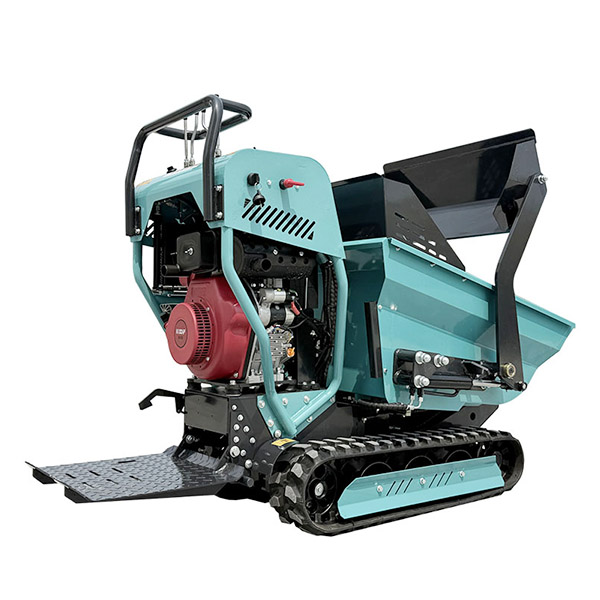
For decision-makers evaluating fleet upgrades, sizing matters. Sourcing a mini dumper truck for sale provides unparalleled maneuverability. You eliminate the massive blind spots plaguing traditional trucks. The operator gains a 360-degree view of their immediate surroundings. A compact mini dumper truck fits through narrow gates and tight alleys safely.
Consider specific applications requiring advanced stability. A CE Diesel Hydraulic Self Loading Crawler Mini Dumper offers incredible operational control. It allows a single operator to load, transport, and dump heavy materials in extremely tight spaces. It provides absolute stability over uneven ground. Using this scaled-down machinery lowers the threshold for crushing injuries and back-over incidents significantly.
Translating written rules into daily habits remains the hardest challenge. Safety manuals prove entirely useless without active enforcement on the ground. Site managers must build a culture prioritizing compliance over speed. Active enforcement requires consistent supervision and measurable training metrics.
You must align all site operations with OSHA Standard 1926.602. This federal standard dictates strict earthmoving equipment rules. Ensure only certified and explicitly authorized personnel operate these heavy vehicles. Never allow untrained laborers to move a truck "just a few feet." The most fatal accidents happen during brief, unauthorized machine movements.
Safety training requires ongoing conversation. Overcome general "safety complacency" by utilizing weekly toolbox talks. Integrate specific hazard reviews into pre-shift meetings. Discuss the dangers of cutting corners during sharp turns. Remind the crew about specific site terrain changes caused by recent weather.
To help structure these training modules, we recommend using a standard risk framework. The chart below summarizes essential hazard mitigations for safety managers:
Hazard Category | Primary Operational Risk | Required Mitigation Strategy |
|---|---|---|
Uneven Terrain | Lateral center of gravity shift; Rollover | Mandate unloading solely on compacted, leveled ground. |
Blind Spots | Back-over crushing injuries to ground crew | Deploy spotters equipped with two-way radios for reversing. |
Overhead Wires | Electrocution of operator; Cab fire | Maintain 10-foot minimum visual clearance prior to lift. |
Sticky Loads | Material freezing to upper bed; Imbalance | Inspect bed liners daily; clean out frozen material manually. |
Hydraulic Failure | Bed collapsing on maintenance workers | Use rigid physical support blocks per OSHA 1926.601(b)(6). |
Next-step actions matter immensely for fleet managers. You must audit your current site traffic control plans today. Update your spotter training protocols to include radio etiquette. Finally, evaluate whether your current fleet matches the safety demands of upcoming contracts. Right-sizing your equipment proactively saves lives and protects your business.
Rigorous daily inspections prevent hidden mechanical failures from becoming catastrophic job site accidents.
Strict adherence to site geometry rules ensures stable, level ground for every material dump.
Proactive hazard communication through dedicated spotters and toolbox talks eliminates deadly blind spots.
Contractors must audit fleet safety compliance regularly to maintain federal OSHA standards.
Consider diversifying your fleet by procuring a compact mini dumper to safely conquer confined, unstable terrain.
A: Ensure the truck sits on firmly compacted, completely level ground. Verify tires maintain even pressure across all axles. Use high-quality bed liners to prevent wet materials from sticking to the upper bed. Finally, align the tractor and trailer perfectly straight before engaging the hydraulic lift.
A: Stay inside the cab immediately. Keep your seatbelt securely fastened and brace for a hard impact. Jumping from a tipping truck ranks as a leading cause of fatal crushing injuries. The reinforced cab provides your best chance of survival during a rollover.
A: Tracked mini dumpers distribute machine weight evenly across a broader surface area. This physical design prevents the machine from sinking or tipping on soft, muddy terrain. A standard wheeled truck proves highly unstable in these exact confined environments.
A: You must adhere strictly to OSHA regulations. Never rely solely on the hydraulic lift system to hold the bed. Always insert approved physical safety blocks or rigid metal props to secure the bed. Place these supports before positioning yourself underneath for any maintenance.


