

Views: 0 Author: Site Editor Publish Time: 2026-08-12 Origin: Site
Construction site profitability relies heavily on protecting tight operational margins. Today, project success is frequently won or lost in material handling and overall site throughput. Using inappropriate equipment for moving spoil, aggregates, or waste creates a massive operational drag. Teams often waste valuable hours forcing digging machines to carry dirt across vast sites. Operators should focus strictly on continuous loading instead. This equipment mismatch halts progress and burns unnecessary fuel. Deploying the right dedicated transport unit transitions material handling from a frustrating logistical bottleneck into a highly predictable, scalable process. This guide outlines how to evaluate operational gains effectively. We will compare various equipment alternatives to help you make informed decisions. You will learn how to select the exact machine specifications tailored perfectly for your unique site requirements.
Volume & Velocity: Dumpers isolate the transit phase of material handling, allowing loading equipment (like excavators) to operate without interruption.
Asset Allocation: Replacing multi-purpose workarounds with a dedicated dumper reduces wear on prime movers and cuts fuel consumption per cubic yard moved.
Risk Mitigation: Modern dumpers engineered with swivel skips and ROPS/FOPS compliance drastically reduce ergonomic injuries and manual handling risks.
Evaluation Focus: Choosing the right unit requires matching payload capacity, chassis type (rigid vs. articulated), and traction (tracked vs. wheeled) to specific site topography and access constraints.
Many project managers struggle to define "site throughput" accurately. It represents the total volume of material moved seamlessly from extraction points to processing zones. Cycle times degrade sharply when operators force excavators to "tram" or carry material across a site. Excavators are prime movers engineered specifically for digging. They lose immense productivity when walking spoil across uneven terrain. Every minute an excavator spends traveling is a minute it stops digging.
We measure operational success using specific, trackable efficiency metrics. Evaluating these data points reveals hidden workflow bottlenecks instantly.
Cubic Yards Moved Per Hour: Dedicated haulers increase this metric exponentially by isolating the transit phase.
Reduction in Manual Labor Hours: Mechanizing the transit process frees up your manual workforce for skilled tasks.
Lowered Fuel Consumption Per Ton: Haulers use significantly less fuel to move a ton of dirt compared to a heavy excavator walking the same distance.
Implementation reality dictates careful logistical planning. An earthmoving unit is only as efficient as its designated loading cycle. You must size the hauler's skip capacity to match the excavator's bucket volume perfectly. Industry standards recommend matching these capacities closely. Operators should need exactly three to five passes to fill the skip completely. Fewer passes indicate the transport unit is too small. This causes excessive transit trips. More passes mean the excavator wastes time loading a massive skip. This creates unwanted delays at the dig face.
Site managers often face a common evaluation dilemma before starting new projects. They must choose between securing a specialized transit vehicle versus a versatile Skid Steer Loader. We must clarify these distinct roles to maximize overall site efficiency.
Where does the skid steer excel? It offers unparalleled versatility for diverse site tasks. Operators use it heavily for loading, grading, and short-distance transfers. These machines thrive primarily on relatively flat, stable terrain. They switch attachments quickly to tackle multiple jobs. Teams deploy them to scrape surfaces, sweep debris, and load small aggregate piles.
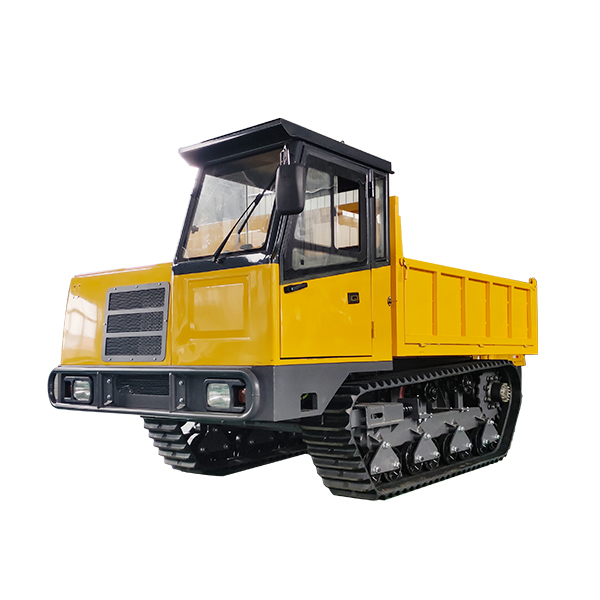
Where does the dedicated transit unit win? The field evidence strongly favors specialized machines for pure material transit. They offer a vastly superior payload-to-weight ratio. They achieve much higher travel speeds over longer distances. Tracked variants handle deep mud or extreme gradients effortlessly. They carry heavy loads across treacherous ground without bogging down or stalling. Their core design focuses entirely on moving maximum volume quickly.
Smart site managers frequently adopt a combined synergy approach. They couple a loading machine alongside a dedicated transit unit. This pairing creates a continuous, high-efficiency material handling loop. The loader stays stationary and continuously fills the skip. The transit unit continuously hauls the material away. Nobody waits. Productivity remains incredibly high.
Equipment Role Profile Matrix
Feature Category | Skid Steer Focus | Transit Unit Focus |
|---|---|---|
Primary Application | Loading, grading, sweeping, multi-tool tasks | Bulk material transport over varying distances |
Terrain Suitability | Flat, stable, prepared hard surfaces | Deep mud, extreme gradients, rough uneven ground |
Transit Speed | Moderate (best for very short cycles) | High (ideal for longer site transit routes) |
Payload Capacity | Limited by bucket size and tipping load | High volume skip designed for bulk weight |
Modern transit machines bring highly specific engineering features to the job site. These innovations directly transform frustrating project challenges into streamlined outcomes. We will explore how smart engineering improves daily material flow.
Confined space agility matters immensely on narrow urban sites. Articulated chassis designs allow for remarkably tight turning radiuses. Operators maneuver heavy loads through cramped residential builds smoothly. They navigate around existing structures without causing accidental damage. The pivot steering mechanism ensures the rear wheels track exactly behind the front wheels. This tracking reduces ground tearing and protects delicate landscaping.
Precision placement relies heavily on modern rotating skip designs. A 180-degree power swivel skip eliminates complex machine maneuvering when backfilling deep trenches. Operators pull the machine up parallel to the trench edge. They simply rotate the skip laterally and dump the material directly inside. This single feature saves considerable time per cycle. It also drastically reduces heavy ground disturbance around sensitive excavation zones.
High-volume throughput requires entirely different machine configurations. Straight tip models contrast sharply against swivel skip designs. They feature forward-tipping mechanisms only. This robust design allows for much higher maximum payloads. We specify these units strictly for bulk earthmoving on large open sites. A forward-tipping Dumper clears massive spoil piles significantly faster than any swivel alternative.
Articulated Steering: Delivers unmatched maneuverability in tightly restricted zones.
Swivel Skips: Enables parallel trench backfilling to prevent edge collapse.
Straight Tip Skips: Maximizes pure payload volume for heavy bulk transit.
Hydrostatic Drive: Provides smooth acceleration without manual gear shifting.
Reducing manual handling remains a critical priority for maintaining site safety. Workplace ergonomic injuries devastate project timelines instantly. Mechanizing the movement of heavy materials drastically lowers physical worker fatigue. Fresh workers maintain higher daily productivity levels. They make fewer dangerous mistakes. Protecting human energy yields a massive return on investment for any project team.
Visibility and site compliance drive modern equipment manufacturing standards. Regulatory bodies exert intense pressure regarding continuous site safety improvements. Modern units now feature mandatory forward-facing cameras to eliminate blind spots. Manufacturers reinforce ROPS (Roll-Over Protective Structures) and FOPS (Falling Object Protective Structures) aggressively. Advanced models also include automatic hydrostatic braking. This critical safety system ensures the machine stops immediately when operators release the drive pedal.
We must address a transparent assumption regarding site safety. These machines undeniably improve overall ergonomic safety. However, they simultaneously introduce severe vehicle-pedestrian interface risks. Proper site traffic management plans act as non-negotiable prerequisites before implementation. You must physically separate pedestrian pathways from active machine transit routes.
Common Mistakes to Avoid in Traffic Management:
Allowing unescorted pedestrians near active dumping zones.
Failing to mandate high-visibility clothing for all ground personnel.
Operating heavy transit machinery without conducting a daily pre-start brake test.
Ignoring manufacturer gradient limits when navigating steep spoil heaps.
Choosing the correct machine requires rigorous evaluation framework application. We analyze specific site constraints carefully before selecting any equipment. Every project demands a tailored mechanical approach.
Tracked machines provide the highest possible ground traction. We specify them regularly for low ground pressure needs. They excel on sensitive turf, steep inclines, or deep mud. They travel at much lower speeds but conquer terrible conditions safely. Wheeled machines deliver significantly higher transit speeds. We specify them for hardpack, tarmac, and large sites requiring rapid transit. However, wheeled units pose a much greater risk of deep rutting in wet conditions.
We guide buyers aggressively away from the dangerous "bigger is always better" mindset. You must match payload capacity directly to physical access limitations. A 1-ton micro unit fits cleanly through standard residential doorway widths. A 9-ton site unit requires wide open highways and massive turning zones. Proper sizing prevents frustrating logistical bottlenecks. An oversized machine stuck behind a narrow gate halts all production.
Unexpected equipment downtime cripples daily site throughput severely. You must evaluate physical access to daily service points before acquiring a machine. Assess the long-term reliability of the internal hydrostatic drive system. Confirm regional parts availability before committing to a specific brand. Machines requiring special imported filters will leave your site stranded during critical phases. Choose equipment backed by robust local support networks.
A dedicated transport unit serves as a highly strategic investment in site throughput. It ensures total workflow isolation for maximum efficiency. Your excavators keep digging continuously. Your haulers keep moving soil without interruption. We advise project managers to audit their current loading cycle times immediately. Measure your specific site access pinch-points accurately to avoid sizing errors. Consult closely with your loading equipment operators before making any final selection. They understand the ground realities best. Request a comprehensive site assessment today. View specific product spec sheets or contact a trusted equipment team to optimize your operations.
A: Yes. Most micro units feature exact width constraints measuring between 700mm and 800mm. They easily navigate standard residential doorways. This compact sizing makes them highly suitable for indoor renovations and tight backyard landscaping projects where access remains severely restricted.
A: Requirements vary heavily by regional legislation. Most jurisdictions require basic competency training and formal certification for heavy equipment operation. Operators usually need a specialized plant ticket. This certification ensures full site safety compliance and maintains the validity of project insurance policies.
A: Baseline industry standards typically rate tracked units for maximum gradients up to 20 or 25 degrees when traveling straight up or down. Safe capacities drop significantly when traversing laterally across a slope. Always consult the specific manufacturer guidelines for exact limitations.
A: Follow the standard three-to-five bucket rule closely. Divide the hauler's skip capacity by your excavator's bucket volume. The result should fall exactly between three and five. This ensures optimal loading efficiency without causing frustrating excavator idle time.


