

Views: 0 Author: Site Editor Publish Time: 2026-03-31 Origin: Site
Warehouse managers, fleet operators, and procurement directors face a critical choice today. The transition to an electric warehouse forklift fleet is no longer just about emissions—it is an operational strategy. However, the battery technology you select will ultimately dictate your facility's throughput, usable square footage, and 5-year profitability.
Suboptimal battery choices create daily friction. They drain labor hours, inflate electricity bills, and slow down operations during peak seasonal demand. To build a truly resilient supply chain, you must view forklift power sources as integrated productivity engines.
Selecting the optimal electric forklift battery requires looking past upfront pricing to evaluate discharge curves, total cost of ownership (TCO), charging infrastructure, and precise application matching. In this guide, we will break down the leading power technologies. You will learn how to match specific chemistries to your unique warehouse zones, decode lifetime costs, and implement these systems safely.
TCO > Initial Price: Lithium-ion requires a higher capital expenditure but routinely outpaces lead-acid in 5-year ROI due to zero-maintenance requirements and eliminated swap times.
Infrastructure Impact: Modern battery chemistries allow for "opportunity charging," reclaiming valuable warehouse footprint previously dedicated to ventilated lead-acid charging rooms.
Application Dictates Chemistry: Cold storage, narrow-aisle (VNA) racking, and multi-shift schedules require distinct power profiles (e.g., heat dissipation rates, flat discharge curves) for optimal efficiency.
Implementation Risks: Retrofitting older trucks with newer, lighter battery tech requires strict counterweight compliance and operator habit changes.
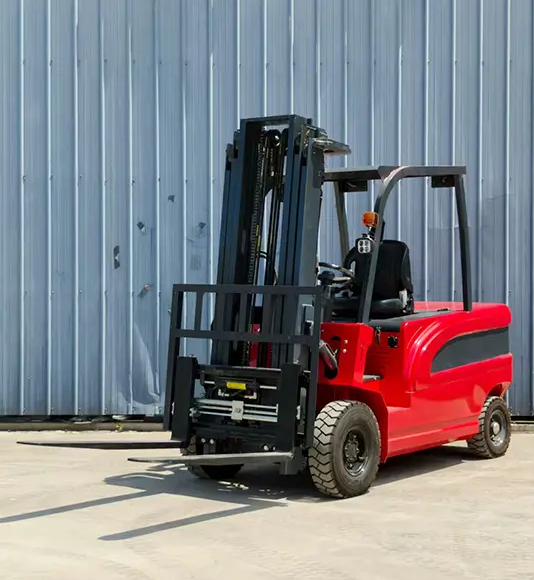
Making suboptimal battery choices leads directly to operational bottlenecks. Poor power management causes mid-shift degradation, bloated maintenance payrolls, and premature equipment wear. You cannot maximize your facility's throughput if your material handling equipment fails to perform consistently across a full shift.
You must understand the operational friction caused by voltage drops. Traditional batteries experience a steady decline in voltage as they discharge. This voltage drop directly affects hydraulic pump performance. Declining lifting speeds at the end of a shift reduce the number of pallets your team can move per hour. When lift speeds slow down by even a few seconds per cycle, the cumulative daily loss in productivity becomes severe.
Legacy systems carry immense hidden costs tied up in warehouse real estate. Traditional battery management demands dedicated hoist rooms, heavy-duty cranes, eye-wash stations, and strict ventilation compliance. These legacy charging rooms consume prime warehouse footprint. By transitioning to modern technologies, you can repurpose this wasted space into revenue-generating rack space.
You are not simply purchasing "batteries." You are buying guaranteed operational uptime for your Electric Warehouse Forklift fleet. Every decision must anchor back to this baseline. Evaluate power sources based on how many continuous hours they keep your trucks moving product on the floor.
The industrial battery market primarily revolves around three distinct technologies. You must understand their specific strengths, limitations, and maintenance realities to match them to your daily operations.
Lead-acid technology has powered industrial trucks for decades. It relies on a liquid electrolyte solution and lead plates to store and discharge energy.
Best for: Single-shift operations with strict capital expenditure limits.
Realities: This chemistry operates on a rigid 8-8-8 rule. It requires an 8-hour charge followed by an 8-hour cool-down period. It demands strict standard operating procedures (SOPs). Your team must perform regular watering, equalize cells to prevent acid stratification, and wash terminals to avoid corrosion. You can expect an average lifespan of 1,000 to 1,500 charging cycles.
TPPL represents a bridge between traditional lead-acid and advanced lithium systems. It utilizes highly compressed, ultra-thin plates.
Best for: 1-to-2 shift facilities wanting maintenance-free power without lithium pricing.
Realities: TPPL is an advanced AGM (Absorbent Glass Mat) technology. It supports fast charging and completely removes the need for watering. However, it carries a very strict operational limit. Discharging a TPPL battery below 40% depth of discharge can void warranties and permanently ruin the battery structure.
Lithium-ion technology, specifically Lithium Iron Phosphate (LFP), has transformed material handling. It focuses heavily on software-driven performance.
Best for: High-throughput, multi-shift, or 24/7 continuous operations.
Realities: Lithium delivers an extremely flat discharge curve. It maintains full lifting power and travel speed until it is entirely empty. The lifespan routinely exceeds 3,000 cycles. These units are built around complex Battery Management Systems (BMS) rather than raw chemistry alone. The BMS protects the cells from overheating and balances the load automatically.
Use the following summary chart to compare core operational metrics at a glance.
Technology | Average Lifespan | Discharge Curve | Maintenance Required | Best Operational Fit |
|---|---|---|---|---|
Traditional Lead-Acid | 1,000 - 1,500 Cycles | Sloping (Loses power over shift) | High (Watering, Equalizing, Washing) | Single-shift, low usage |
TPPL (Thin Plate Pure Lead) | 1,200 - 1,500 Cycles | Moderate (Must stay above 40%) | Zero Maintenance | 1-2 shifts, frequent plugging |
Lithium-Ion (LFP) | 3,000+ Cycles | Flat (Consistent 100% power) | Zero Maintenance | Multi-shift, high throughput |
You cannot apply a one-size-fits-all approach to warehouse power. Different material handling vehicles and storage environments subject batteries to vastly different stressors.
Operating in sub-zero temperatures severely impacts battery chemistry.
Challenge: Extreme cold reduces standard lead-acid capacity by up to 35%. This forces operators to swap batteries much earlier in their shift.
Evaluation Criteria: You must compare heat output. Lithium batteries generate significantly less heat during discharge compared to lead-acid. For example, a lithium cell might generate 0.7 kWh of heat compared to 1.4 kWh from a lead-acid unit. This drastically reduces the energy compensation required from your facility's costly refrigeration systems.
Class II vehicles operate high up in warehouse racking, moving heavy pallets at extreme heights.
Challenge: High-level lifting requires immense, continuous power stability. When a battery weakens, mast lift speeds slow to a crawl, risking instability.
Evaluation Criteria: Lithium-ion’s flat discharge curve prevents the mast-lift sluggishness that typically plagues lead-acid batteries in the final hours of a shift. The voltage remains perfectly stable, ensuring your VNA operators maintain peak productivity from minute one to minute four hundred and eighty.
Motorized hand trucks and pallet jacks handle horizontal transport across the dock.
Evaluation Criteria: Smaller 12V and 24V lithium setups excel here. They allow operators to leverage opportunity charging during 15-minute coffee breaks or lunch hours. You can plug them directly into standard industrial wall outlets without damaging the cell structure or causing dangerous hydrogen gas emissions.
Procurement teams often suffer sticker shock when pricing modern batteries. However, focusing solely on the purchase order price hides the true financial impact.
You must establish a rigorous framework for TCO evaluation. A single lithium unit can often replace three lead-acid units in a heavy multi-shift scenario. You eliminate the need to purchase "spare" batteries for second and third shifts. The initial capital expenditure (CapEx) is higher, but the operational expenditure (OpEx) plummets over a five-year horizon.
Labor is your most expensive warehouse resource. Traditional systems require massive amounts of hidden labor hours. Your team spends time watering cells, scrubbing terminal corrosion, and executing battery swaps. A standard battery swap takes an operator between 20 and 30 minutes per truck. Multiply that 30 minutes by hundreds of swaps per month, and the lost productivity costs tens of thousands of dollars annually.
Consider the charging efficiencies of the technologies. Lead-acid charging is inefficient, losing a significant portion of electrical energy as heat. Lithium-ion converts grid power to battery power at a significantly higher efficiency rate (often near 95%). This superior conversion rate directly lowers your monthly industrial electricity bills.
Advanced power solutions act as digital assets. Modern smart BMS systems integrate directly with Warehouse Management Systems (WMS) via CAN or RS485 communication protocols. This connectivity allows warehouse managers to track specific usage patterns. You can balance fleet workloads, prevent operators from abusing equipment, and avoid premature battery death through predictive maintenance alerts.
Upgrading your fleet requires careful engineering. You cannot simply drop a new battery into an old chassis without following strict safety and compliance protocols.
This is a critical engineering risk you must address. An electric forklift relies on the massive physical weight of a lead-acid battery for structural chassis stability. The battery acts as a necessary counterweight to the load on the forks. If you retrofit a truck with a newer, significantly lighter lithium battery, you risk tipping the vehicle over. Specific ballast plates or counterweights must be installed in the battery box to match the manufacturer's data plate and maintain safe lifting capacities.
Before purchasing, you must read the OEM forklift manual and the existing battery data plate. A quick guide to data plates involves matching voltage and Amp-Hours (Ah). For instance, standard naming conventions like "18-85-17" tell a story. It denotes 18 cells (which equals a 36V system), an 85 amp capacity per plate, and 17 plates per cell. You must match the system voltage precisely (e.g., 24V, 36V, 48V, 80V) to prevent catastrophic electrical system damage.
Hardware upgrades fail without operator buy-in. Moving from lead-acid to lithium requires breaking old habits.
Operators must abandon the "run it to empty, then swap it" mindset.
Supervisors must train operators on the "park and plug" mentality.
Teams must embrace opportunity charging, plugging in whenever the truck is idle for more than 10 minutes. This maximizes your investment and ensures the fleet never runs out of power.
Do not buy blind. Advise your procurement team to conduct a comprehensive power study. You should perform load profiling on your existing fleet to track true amp-hour usage per shift before soliciting vendor quotes. This data guarantees you buy the exact capacity you need—nothing more, nothing less.
Selecting the right electric forklift battery bridges the gap between mechanical hardware and digital warehouse efficiency. It is a decision that impacts everything from floor space utilization to operator safety and daily output. When you evaluate power delivery through the lens of total cost of ownership, the true value of advanced chemistries becomes obvious.
Lead-acid remains a viable, cost-effective option for low-frequency applications or single-shift operations with lightweight duties. However, high-volume distribution centers and multi-shift facilities must look to Lithium-ion or advanced TPPL technologies to remain competitive and control labor costs.
Take action today to optimize your fleet. Schedule a comprehensive fleet energy audit with your facility team, or contact a designated integration specialist. They can help you run a load-profile study and calculate your specific facility’s TCO break-even point for a modern battery upgrade.
A: Most existing models can be retrofitted safely. However, it requires verifying the exact voltage compatibility to prevent motor damage. You must also update the dashboard monitoring instruments so operators can read the new battery's state of charge accurately. Most importantly, you must add proper heavy counterweights into the battery compartment to maintain the manufacturer's safe load capacities.
A: Opportunity charging is the practice of plugging in the battery for short bursts of power during regular breaks, lunches, or shift changes. This happens without requiring a full cool-down cycle. It is highly effective and necessary for lithium and TPPL batteries to maintain multi-shift operations. However, this practice is damaging to traditional lead-acid batteries and will shorten their lifespan.
A: You read it by breaking down the standard industry naming convention. For example, a model number like "18-85-17" tells you three things. The "18" denotes the number of cells (multiply by 2 for a 36V total). The "85" denotes the amp capacity per positive plate. The "17" indicates the total number of plates inside each cell.
A: They are legally mandatory for standard lead-acid batteries. Charging lead-acid causes off-gassing, releasing highly flammable hydrogen gas that requires strict ventilation compliance and dedicated facility space. Transitioning to sealed lithium-ion or advanced TPPL batteries eliminates this off-gassing risk. Consequently, it removes the compliance burden and allows you to reclaim that warehouse space.


