

Views: 0 Author: Site Editor Publish Time: 2026-04-16 Origin: Site
Selecting the perfect compaction equipment is rarely a basic "this or that" scenario. It relies heavily on soil makeup, project size, and site layouts. Improper soil compaction carries severe structural risks. You might encounter premature foundation failure, persistent poor drainage, or devastating soil erosion. These physical failures inevitably lead to astronomical financial costs for rework. To prevent this, you need the right tools for the job. We designed this guide to give you a concrete, engineering-based evaluation framework. You will discover exactly how to assess these machines. We will show you which option delivers the highest structural integrity for specific site conditions. You will also learn how to maximize your return on investment across various operational phases.
Mechanism matters: Plate compactors rely on high-frequency vibration for granular soils; road rollers utilize shear force and massive static weight for cohesive materials.
Scale and depth dictate the choice: Plate compactors max out at shallow lifts (typically under 12 inches), whereas rollers cover massive surface areas with deeper compaction capabilities.
Look beyond acquisition cost: Total Cost of Ownership (TCO) must factor in transportation logistics, operator licensing, and fuel efficiency, not just the sticker price.
Strategic phasing: Many commercial projects require both—plate compactors for trench/base preparation and heavy rollers for final surface finishing.
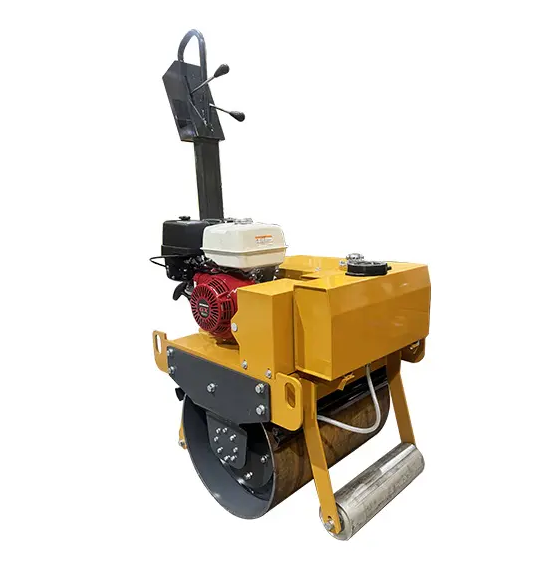
Understanding exactly how force applies to soil helps you choose the correct equipment. Different machines tackle soil density using vastly different physical principles. You must match the mechanism to the material. Failing to do so guarantees weak foundations.
This equipment operates by rapidly transferring high-frequency vertical and horizontal vibrations. An engine drives an eccentric weight assembly. It spins rapidly to create intense shaking forces. These forces act directly on the base plate.
Vibration works perfectly for granular soils. It literally shakes sand and gravel particles into a tighter formation. It forces trapped air voids out of the material matrix. Granular materials lack natural cohesion. They need this rapid shaking to settle properly. Landscapers also rely heavily on them. They help settle interlocking paving stones evenly into sand beds.
Limitation: They become highly inefficient in heavy clays. Cohesive soils act like sponges. They absorb the vibratory impacts without densifying. Worse, wet clay simply sticks to the base plate rather than compacting. You will waste time peeling mud off the machine instead of building a solid base.
Heavy machinery takes a more aggressive approach. It utilizes sheer mass combined with dynamic forces. Many models add vibration or pneumatic kneading actions. This combination actively crushes and binds materials together. It pushes particles past their natural friction points.
This massive static weight manages heavy cohesive soils effortlessly. Clays require immense pressure to squeeze out moisture and air. Large-scale aggregate bases also demand heavy shear force to lock angular rocks together. Granular materials rely on vibration, but cohesive materials demand sheer brute force.
Equipment Variation: You will find several variations on the job site. Smooth drum models offer perfectly flat finishes for asphalt. Meanwhile, a double drum road roller maximizes efficiency. It compacts the surface ahead of and behind the operator simultaneously. This dual action cuts passing times in half.
Every commercial construction project moves through distinct phases. Each phase presents unique spatial limitations and material requirements. Deploying the wrong machine at the wrong time ruins project timelines.
Early project stages often involve tight, restricted areas. Trench backfilling, utility line installations, and tight residential perimeters require maximum maneuverability. You cannot fit heavy machinery into a narrow plumbing trench. Reversible or forward plate compactors shine here. Operators can easily guide them around pipes and delicate concrete forms.
During subgrade preparation, your focus remains highly localized. You want to establish a dense subgrade precisely where large equipment cannot physically fit. If you ignore these edges, foundation settling will begin at the perimeter.
Final lifts change the operational requirements entirely. Large-scale asphalt laying and massive highway sub-bases demand continuous, wide-pass coverage. Asphalt temperature drops rapidly. You must compact it quickly before it cools and hardens un-evenly.
Deploying a road roller prevents the excessive operational overlap you see when using small plates. It delivers uniform density across a vast footprint. If you try finishing a parking lot using small vibratory plates, you face massive "rework" times. Wide drums ensure a seamless finish while keeping ahead of the asphalt paver.
Acquisition price alone provides an incomplete financial picture. Total Cost of Ownership (TCO) dictates your true profit margins. You must evaluate logistics, daily maintenance, and transport variables.
Walk-behind equipment offers incredibly low barriers to entry. You can find budget-friendly purchases for small fleets. Cheap daily rentals make them accessible for quick, one-off jobs. Small contractors can buy several units without draining capital.
Heavy-duty rollers represent major capital expenditures. Prices span from tens to hundreds of thousands of dollars. Because of this massive upfront cost, utilization rates become critical for ROI. If heavy machinery sits idle in your yard, it drains your profitability daily.
Logistics often decide which tool gets deployed first. Portability matters heavily for short-duration tasks.
Plates are highly portable. Two workers can usually lift them. Most fit easily in standard pickup trucks or small utility trailers.
Rollers require specialized heavy-haul transport. You need lowboy trailers and heavy-duty towing rigs.
Transporting heavy equipment mandates commercial driver's licenses (CDL). It also requires meticulous site staging to safely unload.
Small engines dominate light equipment. They mean drastically lower fuel consumption. They also simplify preventative maintenance. Your crew can easily change drive belts, air filters, and basic fluids on site.
Heavy machinery introduces complex hydraulic systems. They suffer from high fuel consumption during heavy pulls. You face costly downtime if you require specialized mechanic support. Blown hydraulic lines or electronic sensor failures will completely stop your job site until an expert arrives.
Cost Category | Plate Compactor | Heavy-Duty Roller |
|---|---|---|
Capital Expense | Low ($1,000 - $4,000) | High ($30,000 - $150,000+) |
Transport Cost | Minimal (Pickup truck) | High (Heavy-haul trailer, CDL) |
Maintenance | Simple (Belts, spark plugs, oil) | Complex (Hydraulics, diesel engines) |
Fuel Consumption | Gallons per week | Gallons per hour |
Modern job sites face intense regulatory scrutiny. Project managers must balance aggressive timelines against stringent safety codes. Failure to protect operators or follow environmental rules invites heavy fines.
Physical toll directly impacts daily productivity. Manual equipment strains the human body over time.
Walk-behind compactors expose operators directly to vibration. Extended daily use causes Hand-Arm Vibration Syndrome (HAVS). This syndrome damages nerves and blood vessels permanently.
Ride-on models offer ergonomic seating. They isolate the operator from intense vibrations. They also feature ROPS (Roll-Over Protective Structures) to prevent crushing injuries.
However, heavy ride-on equipment presents dangerous blind spots. It requires certified operators to navigate safely around ground crews.
Noise pollution dictates operating hours in urban environments. Small plate compactors generate manageable noise levels. They are much easier to deploy in noise-restricted residential zones early in the morning.
Large diesel machines generate exceptionally high decibel levels. They also emit heavy exhaust particulates. You must ensure strict compliance with local municipal operating hours. You also need to meet shifting EPA standards regarding diesel emissions on public projects.
Both machines play a pivotal role in project sustainability. Heavy equipment excels at crushing reclaimed asphalt pavement (RAP). This action seamlessly integrates old roads into new sub-bases. Meanwhile, smaller plates help bed recycled aggregate. Municipal hardscaping projects rely on them to settle recycled glass or crushed concrete into pedestrian walkways.
You cannot make equipment decisions based on gut feelings. You need a structured approach. Use the following criteria to evaluate exactly what your upcoming phases require.
Site Condition | Recommend Plate Compactor | Recommend Roller |
|---|---|---|
Soil Composition | Sand, Gravel, Loosely Graded | Heavy Clay, Mixed Silt, Sticky Soil |
Lift Depth | Under 12 inches | 12 to 36+ inches |
Space Constraints | Trenches, Edges, Pathways | Open Lots, Highways, Runways |
The project footprint remains extremely confined. They work perfectly in utility trenches, residential sidewalks, and small driveways.
Your soil composition is primarily granular. Use them for loose sand, small gravel, or standard cold-patch asphalt repairs.
You manage shallow lift depths. They perform best when compacting layers under 6–12 inches per pass. Deeper layers will remain loose at the bottom.
The project involves massive, long, continuous passes. They dominate parking lots, new highways, and large commercial building plots.
Soil composition acts highly cohesive. Heavy clay absolutely requires deep-lift compaction using immense static weight to remove water voids.
Rapid coverage speed ties strictly to your project profitability. When you bid on square footage, wide drums win every time.
Acknowledge reality: most major jobs require multiple tools. Commercial contractors rarely choose just one. They deploy plates for preliminary edge-work around curbs and manholes. Then, they deploy a double drum road roller for the primary structural passes. This sequential method guarantees zero uncompacted margins across the entire site.
Assess your project boundaries first to identify tight corners.
Test your soil to determine its exact moisture and clay content.
Calculate your maximum lift depth per layer.
Deploy light equipment for trench lines and tight perimeters.
Follow up with heavy drums to seal the main surface area rapidly.
Physics dictate the tool: Cohesive clays demand static weight and shear force, while granular sands require high-frequency vibration.
Economics drive the scale: Huge surface areas require heavy machinery to protect profit margins, whereas tight trenches demand agile, walk-behind tools.
Specialization wins: Neither machine is universally "better." They remain highly specialized tools engineered for highly specific stages of ground stabilization.
Test before you invest: Always advise project managers to conduct a professional soil bore test. You must confirm material composition accurately before signing any contracts.
Calculate carefully: Map out your total square footage and calculate expected transport logistics before consulting a fleet supplier for purchase or rental agreements.
A: No. The moisture and cohesiveness of heavy clay absorb vibration and cause the material to stick to the base. A padfoot or sheepsfoot roller is required.
A: Typically between 6 to 12 inches per lift, depending on the machine's centrifugal force and soil moisture content.
A: Yes, in most commercial jurisdictions. Ride-on heavy compaction equipment typically requires specific operator certifications and site safety training, unlike walk-behind plates.


