

Views: 0 Author: Site Editor Publish Time: 2026-04-14 Origin: Site
Highway construction and utility maintenance constantly demand highly secure work zones. Full road closures often trigger severe traffic bottlenecks, angry motorists, and complex permitting nightmares. Agencies face immense pressure to keep local economies moving. Planners need a dynamic traffic control strategy to seamlessly balance worker safety and public traffic flow. A rolling roadblock, or precision rolling slowdown, creates a temporary, moving void in traffic to execute high-risk, short-duration tasks. This method prioritizes continuous motion over static delays. However, the operational stakes remain incredibly high. Executing this maneuver requires flawless multi-agency communication, strictly compliant safety equipment, and precise time-distance calculations. Planners must prevent rear-end collisions and unauthorized work zone intrusions. We will break down the exact operational framework for staging a fully compliant slowdown. You will learn how to accurately evaluate your equipment stack and run multiple traffic pacing cycles safely during a single shift.
Definition: A rolling roadblock temporarily paces upstream traffic at a reduced speed (e.g., 15–20 mph) to create a safe, traffic-free downstream window (typically under 15 minutes).
Compliance: Operations must adhere to MUTCD guidelines, requiring Advanced Warning systems (PCMS) and specific shadow vehicles.
Applications: Ideal for overhead bridge lifts, utility line crossings, blast debris clearing, or safely mobilizing slow heavy machinery across live lanes.
Execution: Follows a strict 4-stage operational framework: Assembly, Pacing, Execution, and Release.
Modern traffic management philosophy centers on a simple principle. The primary goal is to slow traffic down rather than stop it entirely. Hard stops create miles of queued vehicles. Standing traffic drastically increases the risk of secondary rear-end collisions. Frustrated drivers fail to notice stationary vehicles in a live lane. By pacing cars at a controlled speed, you maintain forward momentum. This motion keeps drivers engaged and reduces severe crash probabilities.
Project managers also examine Total Cost of Ownership (TCO) and Return on Investment (ROI) drivers. Setting up Temporary Traffic Control (TTC) barriers requires heavy labor. Crews spend hours placing cones, barrels, and concrete barriers. Tearing them down takes equally long. Rolling roadblocks eliminate these heavy logistical costs for tasks lasting only a few minutes. You save thousands of dollars in labor and equipment rentals.
You also reduce public relations fallout. Hard closures often demand complex, community-wide detour mapping. Detours anger local businesses and residential neighborhoods. A rolling slowdown prevents this friction. Drivers experience a brief delay but stay on their intended route.
However, this strategy carries a steep trade-off. It requires highly specialized, localized coordination. You must seamlessly integrate law enforcement, clearing vehicles, and designated pace cars. Time limits are absolute. If the construction operation exceeds the calculated window, traffic containment fails. Upstream queues will grow too large, forcing an emergency traffic release.
Factor | Rolling Roadblock | Hard Lane Closure |
|---|---|---|
Traffic Flow | Maintains continuous forward motion at reduced speeds. | Brings traffic to a complete standstill or forces major detours. |
Setup Time | Minimal physical setup; relies on mobile vehicle staging. | High labor cost; requires physical barricades and lane shifts. |
Safety Risk | Lower secondary crash risk due to moving traffic. | High secondary crash risk at the back of the static queue. |
Time Constraint | Strictly limited window (typically 15 minutes maximum). | Flexible duration (hours, days, or months). |
Project planners cannot use this technique for every task. It works best for brief, highly hazardous operations. Identifying the right use case ensures you comply with state Department of Transportation (DOT) mandates.
Overhead & Utility Operations: Highway crews frequently hoist heavy bridge girders. They install massive overhead highway sign gantries. Utility companies pull high-voltage cables across active lanes. Dropping materials during these tasks would cause fatal accidents. Pacing traffic guarantees the drop zone remains completely empty.
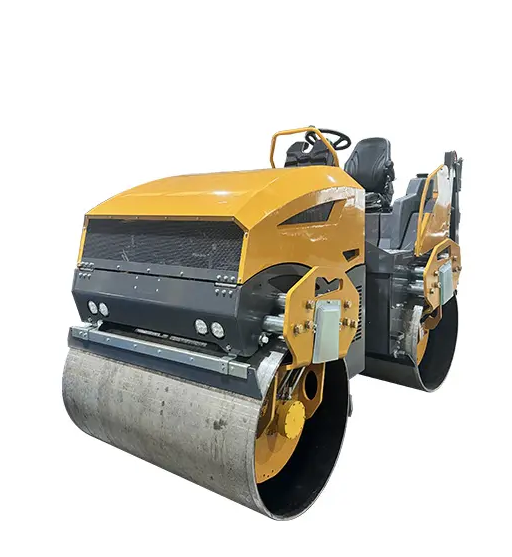
Heavy Equipment Mobilization & Protection: Construction teams often need a safe buffer for loading or repositioning massive machinery. Slow-moving equipment creates massive blind spots. For instance, you might need to move a heavy road roller across active multi-lane highways during night-paving transitions. Similarly, a specialized double drum vibrating roller compactor lacks the speed to merge safely. Pacing creates a massive empty pocket. This allows the equipment operator to traverse the road without risking civilian vehicle collisions.
Emergency & Specialized Convoys: Escort teams use this tactic to clear paths for oversized, super-load freight convoys. State agencies also deploy it after severe weather events. Crews manage post-storm debris clearing on elevated structures or bridges where pulling over is impossible.
Evaluating these scenarios properly prevents unnecessary road closures. When you match the correct tactic to the specific operational hazard, you protect both your workers and the traveling public.
Executing a safe pacing operation requires rigorous adherence to a Standard Operating Procedure (SOP). We base this methodology on proven DOT best practices from states like Florida and New York. Successful teams never skip a step. They rely on clear communication and distinct operational phases.
Stage 1: Staging and Ramp Containment. All pacing vehicles stage on the highway shoulder. These include Truck-Mounted Attenuators (TMAs) and law enforcement cruisers. Their warning lights remain off initially. Simultaneously, ground personnel block all upstream on-ramps. You must prevent rogue vehicles from entering the safety gap once the pacing begins.
Stage 2: The Pacing Maneuver. The lead coordinator gives the command via radio. Pacing vehicles enter the traffic stream side-by-side. They occupy every active lane. Drivers activate all warning lights immediately. The fleet then gradually decelerates the traffic block down to the calculated target speed. This speed often hovers between 15 and 20 mph. Sudden braking is strictly prohibited.
Stage 3: The Clearing Vehicle & The 15-Minute Window. A designated clearing vehicle drives ahead of the pace cars. It travels at normal highway speeds to visually sweep the target area. The clearing driver ensures no stranded motorists remain in the gap. Once this vehicle passes the work zone, the operation officially begins. Planners must calculate this distance perfectly. A 15-minute work window paced at 20 mph requires at least a 5-mile pacing distance.
Stage 4: Communication and Release. The pacing team approaches a pre-determined milestone. This is usually 2 miles upstream from the work zone. The pacing coordinator verifies the task status via two-way radio. They ask the ground crew if the road is clear. Once confirmed, the pacing vehicles pull over to the right shoulder. They accelerate smoothly to release traffic back into normal flow.
Failing to execute any of these stages compromises the entire envelope. Planners must rehearse this SOP during pre-shift safety briefings.
You cannot run a safe pacing operation using standard pickup trucks. State DOTs and the Federal Highway Administration demand specific, certified hardware. We must evaluate the equipment stack to ensure total compliance and optimal safety.
Truck-Mounted Attenuators (TMAs): Standard flatbeds are no longer legally compliant for highway pacing. Using them is inherently unsafe. The operation must utilize certified TMA trucks. These specialized vehicles feature massive, impact-absorbing cushions mounted to the rear. They protect your pacing drivers from distracted motorists who fail to brake. A modern TMA absorbs the kinetic energy of a high-speed rear-end collision. It saves lives on both sides of the crash.
Advanced Warning Systems (MUTCD Compliant): The Manual on Uniform Traffic Control Devices (MUTCD) outlines strict warning protocols. You must place Portable Changeable Message Signs (PCMS) far upstream. The standard requires placement at least 1 mile ahead of the initial pacing location. Furthermore, state regulations often demand advanced notice. You may need to activate these warning boards days or even weeks in advance. This conditions daily commuters to expect upcoming delays.
Law Enforcement Integration: Civilian contractor vehicles can legally pace traffic in many regions. However, integrating marked police cruisers changes driver psychology. Marked vehicles drastically increase public compliance. Flashing police lightbars reduce aggressive lane-weaving instantly. Motorists hesitate to aggressively pass a police cruiser. We highly recommend hiring off-duty law enforcement to lead the pacing block.
Equipment Type | Compliance Standard | Primary Function |
|---|---|---|
TMA Trucks | MASH-Tested Attenuators | Absorb rear-end impacts and protect the pacing driver. |
PCMS Boards | MUTCD Chapter 6 | Provide advanced warning to upstream commuters. |
Two-Way Radios | FCC Compliant Frequencies | Ensure instant communication between pace cars and crews. |
Police Cruisers | Local Agency Marked Vehicles | Enforce legal speed reductions and deter aggressive passing. |
Many infrastructure projects cannot be finished within a single 15-minute gap. Complex tasks demand extended timelines. Teams must execute a series of rolling slowdowns over a single night shift. We often refer to this cyclical operation as the "wash, rinse, repeat" cycle. Managing it properly requires intense focus on queue dissipation.
Cyclical Operations: You might need to drop five massive concrete girders in one night. Each drop takes 12 minutes. Instead of closing the highway for three hours, you run five distinct pacing maneuvers. You execute a slowdown, drop a girder, and release the traffic. You then reset the fleet upstream and perform the process again.
Traffic Dissipation Rules: The primary risk in multi-cycle operations is residual queuing. Project managers must monitor the back of the traffic line. You must allow enough time between pacing cycles for the upstream traffic queue to fully clear. The highway must return to normal baseline speeds. Starting a second pacing cycle while the first queue still exists causes dangerous compounding backups. Traffic will eventually spill onto local streets.
Dedicated Traffic Coordinators: Managing these cycles requires a designated point person. You need a dedicated traffic coordinator. This liaison acts as the single point of contact between the physical work crew and the mobile pacing fleet. The coordinator monitors the crane operator or heavy equipment driver. They ensure pacing never starts until the construction crew is 100% ready. If the heavy machinery experiences a mechanical delay, the coordinator aborts the pacing launch. This precise synchronization prevents wasted pacing cycles and keeps the public safe.
Rolling roadblocks serve as a highly effective, compliance-heavy maneuver prioritizing continuous traffic flow over static lane closures.
Audit your current short-term traffic control protocols against state DOT and MUTCD guidelines to ensure legal compliance.
Evaluate your operational fleet readiness immediately. Ensure you rent or deploy certified TMA vehicles to handle physical highway-speed impacts.
Deploy PCMS hardware days in advance to meet public warning requirements and reduce commuter frustration.
Assign a dedicated traffic coordinator for all future cyclical operations to ensure ground crews and pace cars remain perfectly synced.
A: An official operation is a highly coordinated, permitted traffic control maneuver. It utilizes warning signs, TMAs, and law enforcement to legally secure a temporary work zone. The civilian term is slang. It describes everyday drivers maliciously or obliviously driving side-by-side at slow speeds. This prevents passing and is illegal ("impeding traffic") in most jurisdictions.
A: Most state DOTs mandate strict time limits for these operations. The actual work window cannot exceed 15 to 20 minutes. This absolute limit prevents dangerous upstream traffic backups, minimizes public frustration, and significantly reduces the risk of secondary rear-end collisions.
A: Planners use a specific time-distance formula. It factors in the posted speed limit, the required work duration, and the target pacing speed. For example, pacing traffic at 15 mph to grant 15 minutes of uninterrupted work time requires pacing to start several miles upstream of the actual work zone.


