

Views: 0 Author: Site Editor Publish Time: 2026-03-24 Origin: Site
Unplanned downtime in a busy warehouse carries a massive price tag. In fact, an unexpected battery failure mid-shift can cost operations up to $10,000 per hour in lost productivity. When managing a modern fleet, you cannot simply measure power source lifespan in static calendar years. Instead, you must view it as a highly variable metric.
Real-world longevity depends entirely on chemical composition, charge cycle habits, and strict facility maintenance protocols. This guide serves as a pragmatic framework. Warehouse managers and procurement teams will learn exactly how to project true lifecycle costs. You will discover how to evaluate different battery chemistries, avoid hidden degradation traps, and ultimately maximize your equipment return on investment. Whether you operate a single truck or a massive fleet, understanding these variables prevents costly disruptions.
Cycle-Based Lifespan: Lead-acid batteries typically survive 1,000–1,500 charge cycles (4–6 years in single-shift), while lithium-ion counterparts average 2,000–5,000 cycles (8–10 years).
The Depth of Discharge Red Line: Allowing any electric forklift battery to drop below 20% capacity drastically accelerates degradation and risks burning out motor components.
TCO Over Upfront Cost: While initial acquisition costs for lithium-ion are roughly double that of lead-acid, multi-shift operations achieve ROI through zero-maintenance designs and "opportunity charging" capabilities.
Physical Integration Risks: Swapping battery types requires careful facility and equipment audits, specifically regarding counterbalance weights and dedicated ventilation rooms.
Budgeting capital expenditures based on manufacturer "year" estimates often causes operational shortfalls. Equipment marketers base these estimates on perfect, single-shift scenarios. Real warehouse environments rarely match these ideal conditions. You must evaluate lifespan by charge cycle consumption instead.
Understanding how different battery chemistries count a "cycle" changes how you manage daily operations. Facility managers must train operators based on the specific chemistry they use.
Lead-Acid Cycle Realities: Traditional lead-acid batteries have a standard life expectancy of 1,000 to 1,500 cycles. However, they enforce severe cycle strictness. Plugging in a lead-acid battery for even 10 minutes constitutes one full cycle. If an operator plugs it in during a short coffee break, they waste a precious cycle. This habit rapidly artificially ages the battery.
Lithium-Ion Cycle Realities: Modern lithium-ion units boast a standard expectancy of 2,000 to 5,000 cycles. They operate on cumulative cycle logic. One cycle is only recorded when 100% of the battery's capacity is aggregate-discharged. If you use 20% and recharge it, you only consume one-fifth of a cycle. This logic fully supports fragmented, frequent charging.
Procurement teams must weigh upfront barriers against long-term operational output. Let us look at the distinct evaluation dimensions of both dominant technologies.
Traditional deep-cycle batteries present a much lower upfront barrier. Acquisition typically ranges from $5,000 to $12,000. However, they suffer from inherent voltage drops as they deplete. This feature directly impacts real-world operational outcomes.
Voltage reduction late in a shift directly limits lifting capacity. For example, a truck rated for a 3,500 lb. capacity might drop to a 2,600 lb. functional capacity by hour seven. This forces operators to slow down or take smaller loads. It severely impacts late-shift productivity.
Lithium iron phosphate (LFP) batteries demand a higher initial investment. Costs range from $17,000 to $25,000. Despite the price tag, they maintain a consistent energy density between 100 and 265 Wh/kg until complete depletion. The voltage remains flat.
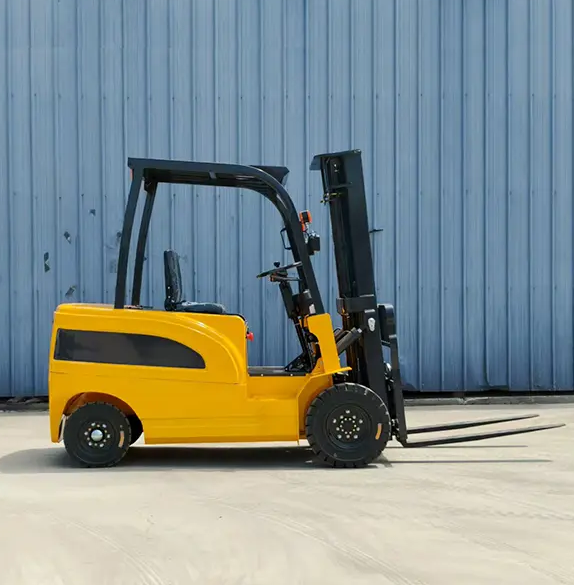
This provides immense scalability. Upgrading to an AC Lithium Battery Electric Warehouse Forklift standardizes power output across heavy duty cycles. Operators experience zero mid-shift performance degradation. The truck lifts just as fast and heavy at 10% charge as it does at 100%.
Performance Metric | Lead-Acid Battery | Lithium-Ion Battery |
|---|---|---|
Initial Cost | $5,000 – $12,000 | $17,000 – $25,000 |
Energy Density | 80 – 90 Wh/L | 100 – 265 Wh/kg |
End-of-Shift Voltage | Noticeable drop, slower hydraulics | Consistent, flat power output |
Maintenance Burden | High (Watering, Equalization) | Zero (Sealed unit, BMS managed) |
Beyond standard cycle counting, environmental and operational habits secretly steal months of life from your equipment. Identifying these variables prevents premature fleet failure.
Equipment abuse dramatically accelerates battery degradation. Pushing equipment to maximum lifting thresholds constantly drains energy faster. High-amperage draws generate excessive internal heat. This heat degrades internal battery cells over time. Consistently lifting maximum capacity loads reduces overall battery life by 6 to 12 months. Managers should properly size equipment for the heaviest expected load, leaving a safety margin.
Batteries are highly sensitive to ambient facility temperatures. Poor climate control destroys capital investments quickly.
Extreme Heat: Ambient facility heat above 92°F forces internal chemistry to work overtime. This heat can slash battery life expectancy by up to 50%.
Freezing Cold: Cold storage applications face different challenges. Freezing conditions below 30°F increase internal resistance. This reduces operational output and runtime by roughly 30%.
Lead-acid batteries require meticulous fluid management. Poor watering practices lead directly to electrolyte boil-overs during the charging phase. A boil-over occurs when too much water is added before charging, causing acidic fluid to expand and spill out.
The total cost of ownership (TCO) impact is severe. Each boil-over permanently destroys 3% to 5% of the battery's total capacity. In daily operational terms, this translates to 15 to 25 minutes of lost runtime per shift. It also corrodes the battery tray and truck chassis.
When operating two or three shifts per day, the true cost of a power source becomes glaringly obvious. Labor and facility space are expensive.
Lead-acid workflows are strictly bound by the "8-8-8" rule. A battery requires 8 hours to charge, 8 hours to cool down, and 8 hours of use. Because of this rigid 24-hour cycle, multi-shift operations must purchase two to three batteries per truck. Furthermore, you must dedicate paid labor to physically swapping these massive batteries between shifts.
Lithium-ion workflows completely eliminate this bottleneck. The technology supports opportunity charging. Operators simply plug the truck in during 15-minute breaks or standard lunch hours. This rapid energy injection allows a single battery to sustain multi-shift operations continuously. You eliminate the need for backup batteries and specialized swapping labor.
Space is a premium asset in modern intralogistics. Lead-acid batteries off-gas highly explosive hydrogen during charging. They require dedicated, hazardous ventilation rooms equipped with acid spill kits, specialized hoists, and eyewash stations.
Moving away from lead-acid technology reclaims this valuable square footage. You can convert the old charging room into profitable storage space or active staging areas.
Switching battery chemistries is not simply a plug-and-play scenario. It requires careful physical auditing to ensure workplace safety.
Every lift truck relies on rear weight to prevent tipping forward when lifting heavy pallets. The battery acts as a crucial part of this engineered counterweight system.
There is a massive weight disparity between chemistries. Lithium-ion batteries typically weigh between 500 and 2,500 lbs. Conversely, lead-acid batteries weigh between 800 and 4,000 lbs. Retrofitting an older electric forklift requires installing manufacturer-approved counterweights. Failing to add this weight alters the center of gravity. This leads directly to tip-overs and severe safety violations.
Knowing exactly when to procure replacements prevents catastrophic downtime. Do not wait for complete equipment failure. Trigger replacement procurement immediately when you observe specific warning signs.
Watch for runtimes dropping to a mere few hours per charge. Look closely at the battery cells; if visible plate sulfation (stubborn white crystals) appears, the capacity is permanently compromised. Finally, listen to your operators. If they report a distinct sulfur or rotten egg smell, the battery is venting dangerous gas and requires immediate removal.
Managing power sources effectively dictates the overall profitability of your warehouse fleet. A misaligned battery strategy bleeds capital through lost productivity and excessive maintenance. To optimize your operations, keep these next steps in focus:
Align your chosen battery chemistry and charging strategy directly with your shift intensity and facility temperature controls.
Conduct a comprehensive fleet power audit to identify operator charging habits and current degradation levels.
Calculate your internal hourly downtime costs to justify future capital expenditures for modern lithium-ion or high-efficiency AC models.
Audit your current charging room footprint to evaluate the potential real estate ROI of switching to sealed-cell technologies.
A: No. The "memory effect" is a myth left over from older nickel-based batteries. Lithium batteries perform best when kept between 20% and 80% charge. Conversely, lead-acid batteries suffer catastrophic and permanent damage if they are discharged below 20%. You should never intentionally drain them fully.
A: No. Automotive batteries are built for short, high-amperage bursts needed to start an engine. Forklifts require true deep-cycle batteries. Deep-cycle designs provide the steady, sustained power necessary for heavy lifting and constant traction over an entire 8-hour shift. Using car batteries causes immediate failure.
A: Only lead-acid batteries require watering. You should add water every 5 to 10 charge cycles. Crucially, watering must happen strictly after the battery is fully charged and properly cooled down. Always use distilled water with a pH level between 5 and 7 to prevent internal contamination.


