

Views: 0 Author: Site Editor Publish Time: 2026-08-12 Origin: Site
Unpredictable ground conditions halt material handling operations instantly. Weather delays and challenging topography frequently destroy site efficiency. Mud after heavy rain stops traditional machinery dead in its tracks. Steep, uneven grades present severe safety risks for conventional transport vehicles. You cannot afford to lose productive days waiting for the soil to dry out. Enter the crawler dumper. This specialized engineering solution completely bypasses the strict limitations of wheeled equipment. Tracked machines thrive where standard tires fail miserably. They float over deep muck and climb severe gradients securely. This comprehensive guide evaluates the mechanical advantages, operational returns, and physical limits of tracked equipment. Site managers and contractors will discover clear metrics to make an informed procurement or rental decision. You will learn exactly why upgrading your material transport strategy transforms difficult terrain from a costly liability into a highly manageable operational variable.
Traction & Flotation: Tracks distribute weight across a larger surface area, drastically lowering Ground Bearing Pressure (PSI) to prevent sinking in soft terrain.
Slope Stability: A lower center of gravity and continuous ground contact allow crawler dumpers to safely navigate steep gradients where wheeled dumpers risk tipping or spinning out.
Operational ROI: Reduces weather-related downtime and minimizes site remediation costs (turf damage), though they come with slower travel speeds and specific track-wear considerations.
Sizing Variations: From heavy-duty earthmovers to a compact mini dumper, equipment scales precisely to the spatial constraints of the job site.
Contractors lose thousands of dollars annually attempting to force wheeled machines through wet environments. We consistently see standard trucks sink their axles deep into muddy job sites. Getting bogged down halts your material flow instantly. You then waste valuable labor hours trying to dig the heavy machinery out by hand. Often, site managers must deploy secondary extraction equipment. Pulling a stuck vehicle requires commandeering another excavator or bulldozer. This dual-machine tie-up severely damages your daily productivity. The hidden operational costs multiply rapidly when crews stand idle.
Site remediation presents another massive financial drain. Deep wheel ruts destroy the structural integrity of the native soil. Standard heavy tires cause severe soil compaction. You face heavy penalties or massive repair bills in environmentally sensitive areas. Landscaping and residential construction sites suffer greatly from extreme turf damage. Fixing destroyed lawns requires hauling in fresh topsoil, manual grading, and laying new sod. These easily avoidable remediation expenses eat directly into your project profit margins. Protecting the ground surface upfront saves tremendous post-project labor.
Weather-induced downtime artificially shrinks your actual working window. Wet conditions sideline conventional transport trucks for days at a time. Standard machinery simply cannot gain necessary traction on saturated dirt. A standard Dumper on wheels becomes virtually useless after a sudden heavy downpour. You end up paying idle crews while waiting for the sun and wind to dry the mud. These weather delays negatively impact strict project timelines. Labor costs inflate exponentially while site progression stalls completely.
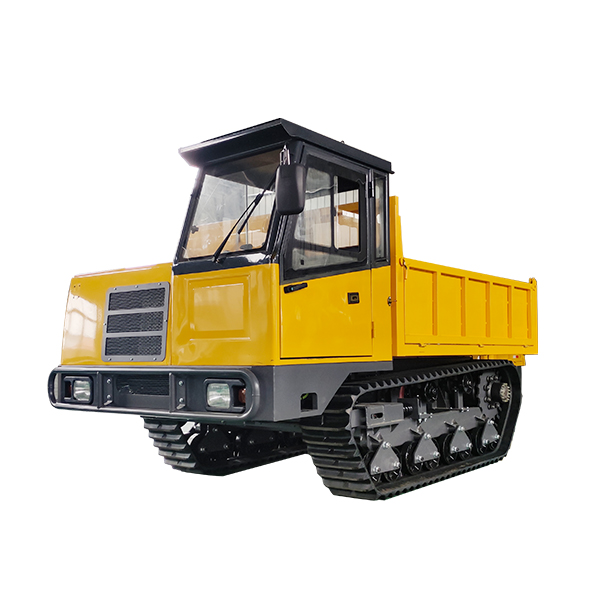
Understanding the fundamental science of flotation explains why tracked machines excel. Wheeled vehicles concentrate their entire massive payload onto four highly localized tire contact patches. This localized weight generates an incredibly high Ground Bearing Pressure (PSI). Rubber or steel tracks function entirely differently. They create a continuous, elongated footprint along the ground. This widespread track system distributes the machine's weight evenly over a massive surface area. The resulting PSI drops dramatically. Think of the difference between walking in deep snow in boots versus snowshoes. The widespread footprint keeps you on top.
Low ground pressure prevents the machine from breaking the fragile surface crust. Soft dirt, thick mud, and loose sand possess a delicate top layer. High PSI tires punch right through this crust immediately. A tracked machine effectively floats on top of the precarious terrain. You can traverse swampy fields or saturated bogs without sinking. The continuous tracks bridge small terrain gaps and soft pockets effortlessly. This flotation capability ensures continuous hauling cycles even in the worst imaginable soil conditions.
Navigating slopes introduces another strict physics challenge. Track cleats, commonly known as lugs, actively grab loose surface material. They dig deeply into the terrain to maintain consistent forward momentum. Tires often experience a dangerous slip-and-slide effect on steep inclines. Smooth or mildly treaded tires spin out quickly on wet grass or loose gravel. Continuous track lugs ensure maximum mechanical grip on uneven topography. The tracked machine's exceptionally low center of gravity further prevents rollover risks. You maintain total vehicle control while ascending or descending steep gradients safely.
Contractors must evaluate their specific site conditions before selecting any transport equipment. Choosing between wheels and tracks directly dictates your operational efficiency. Let us break down the core performance metrics.
The slipping threshold of tracks vastly outperforms wheels in adverse conditions. Wet clay behaves exactly like black ice for standard rubber tires. Tires spin wildly, polish the mud smooth, and lose all forward drive instantly. Loose gravel causes standard tires to dig downward rather than push forward. Tracks mitigate these severe slippage risks entirely. The extended track base maintains constant physical friction. Even when navigating wet clay, the interlocking rubber lugs find immediate purchase. We observe near-zero slippage rates for tracked machinery in environments where wheeled alternatives fail completely.
Payload capacity ratings tell only half the operational story. A wheeled unit boasts a high maximum payload on solid concrete. However, this capacity artificially decreases in deep mud. You cannot fill a wheeled machine to the brim if it risks sinking immediately. Operators routinely underload wheeled trucks to avoid getting stuck entirely. Conversely, a tracked machine maintains its rated payload across adverse conditions. You can fully load the dump bed without fearing catastrophic sinking. This consistent hauling capacity keeps aggregate and soil moving on schedule.
Tight job sites demand exceptional machine maneuverability. Traditional trucks require wide, sweeping arcs to turn around safely. Tracked systems utilize advanced dual-hydrostatic drive motors. This grants them zero-turn or incredibly tight-pivot capabilities. You can spin the entire machine 360 degrees within its own physical footprint. A compact Mini dumper proves absolutely ideal for navigating narrow residential gates. Congested urban demolition sites benefit massively from this localized turning radius. You navigate around scaffolding and tight corners effortlessly.
Equipment Performance Under Challenging Conditions
Performance Metric | Wheeled Equipment | Tracked Equipment |
|---|---|---|
Ground Bearing Pressure | High (Punches through soil crust) | Very Low (Floats over mud) |
Slope Stability | Moderate (High risk of spinning out) | Exceptional (Lugs grip loose terrain) |
Turning Radius | Requires wide open space | Zero-turn capable in tight areas |
Mud Payload Efficiency | Severely reduced to avoid sinking | Maintains 100% rated capacity |
Modern tracked haulers come equipped with highly specialized features. Matching these mechanical traits to your daily tasks maximizes overall site efficiency.
Consider the distinct advantages of compact equipment design. Not every job requires a massive earthmoving machine. Tight-access landscaping demands a significantly narrower machine profile. Indoor demolition projects feature strict doorway width restrictions. Backyard hardscaping often limits access to standard wooden fence gates. Heavy machinery simply cannot fit safely in these constrained spaces. You need a machine scaled perfectly to the physical environment. Compact models slip through 36-inch openings easily. They deliver heavy-duty hauling power precisely where larger trucks cannot go.
Evaluate the crucial benefits of advanced hydraulic systems. High-angle hydraulic dump beds drastically improve load discharge speeds. Moving dry sand requires very minimal tipping effort. Moving sticky materials presents a highly distinct challenge. Wet clay stubbornly clings to standard steel beds. Wet concrete refuses to slide out at shallow angles. High-angle tipping mechanisms raise the bed nearly vertical. Gravity easily overcomes the suction of these sticky payloads. You spend far less time scraping out the bed manually.
Self-loading capabilities offer immense daily labor-saving benefits. Many advanced models feature integrated front-loading shovels. Small crews benefit massively from this specific mechanical attachment. You no longer need a secondary excavator just to fill the hopper. A single operator can scoop aggregate, soil, or debris completely independently. This autonomous loading process cuts equipment rental needs in half.
Here are primary materials perfectly suited for self-loading models:
Crushed gravel and decorative landscaping river rock.
Heavy topsoil, mulch, and compost for raised garden beds.
Demolition rubble, bricks, and broken concrete chunks.
Wet mortar or freshly mixed cement batches.
Every engineering solution possesses specific operational limitations. We must assess the drawbacks of continuous tracks completely transparently.
Tracked machinery travels significantly slower than wheeled counterparts. They lack the high top speeds required for rapid transit. If your job involves long-distance hauling on flat, paved surfaces, wheels win out. Tracked machines become highly inefficient when driving miles down public asphalt roads. They excel exclusively off-road in challenging dirt or mud.
Undercarriage wear and tear requires careful financial consideration. Rubber tracks suffer severe friction wear on harsh surfaces. Operating extensively on concrete, asphalt, or jagged rock destroys the rubber rapidly. The exterior lugs grind down quickly against abrasive terrain. Replacing a snapped or bald rubber track carries a noticeable operational expense. You must limit travel on solid, abrasive surfaces to maximize track longevity.
Maintenance demands daily dedicated attention from the operator. You must clear mud, rocks, and debris from the undercarriage consistently. Packed mud dries into concrete-like blocks overnight. This hardened debris creates severe track tension issues rapidly. It causes premature roller wear and threatens to derail the track completely. A quick pressure wash or manual scrape down prevents these costly mechanical failures.
Operator training takes some preliminary time. Traditional trucks use standard steering wheels. Anyone who drives a car intuitively understands them immediately. Tracked units often utilize skid-steer style dual-hydrostatic controls. You push levers forward to move straight and counter-rotate them to spin. This distinct setup requires a brief initial learning curve. Operators must practice smooth transitions to prevent jerky movements and accidental turf tearing.
Selecting the proper transport equipment directly dictates the success of challenging jobs. We highly recommend relying on a proven decision framework when facing adverse terrain.
Determine your primary surface condition. If the project features high percentages of wet, soft, or sloped ground, prioritize tracked machinery to avoid sinking.
Measure all physical bottlenecks closely. Calculate the spatial limits of gates, alleys, and doors to choose precisely between full-size or compact models.
Assess material types and choose mechanical attachments wisely. Prioritize high-angle hydraulic beds for sticky clay and self-loading shovels for small crews.
Protect your machinery investment through diligent daily maintenance. Train operators to clean undercarriages thoroughly every afternoon to extend the track life.
Consult with reputable equipment dealers regarding your specific daily payload demands. Discuss the exact differences between rubber and steel track configurations for your upcoming projects. Taking these proactive steps guarantees you secure the right machine, eliminate costly weather delays, and keep your site moving safely.
A: Most models safely navigate gradients between 15 to 30 degrees. The exact limit depends entirely on the specific machine design, weight distribution, and surface friction. You must always consult the manufacturer guidelines. Operators must ensure loads remain balanced to prevent backward tipping on steep inclines.
A: They generate very low ground pressure, which prevents deep ruts. However, aggressive pivot turns can easily tear up soft grass. We highly recommend making wide, sweeping turns rather than zero-point spins. Using plywood boards over highly sensitive turf provides an extra layer of guaranteed protection.
A: They present entirely different maintenance profiles. Wheeled machines suffer frequent tire punctures and flat repairs on debris-filled sites. Tracked undercarriages avoid flats but require daily cleaning. Replacing worn tracks and steel rollers generally costs more upfront than buying new tires, but tracks prevent expensive mud-related downtime.
A: Yes, you can drive them across paved surfaces occasionally. However, we strictly caution against prolonged use on hard, abrasive ground. Driving continuously on concrete accelerates rubber track wear rapidly. This harsh friction reduces the economic lifespan of the tracks, forcing premature replacements.


